
How the Dyson Airblade Hand Dryer Line Has Evolved
Posted by Anthony DiCicco on Sep 15th 2026
This article originally covered those products when they were new. They aren't new anymore.
What is more useful today is looking back at how those launches changed the Airblade family, which ideas survived, and how they led to the Dyson products commercial customers see today.
Dyson Airblade Evolution
Jump to a major stage in the development of the Airblade line.
| The Original Airblade | 2013: The Line Expands |
| Airblade V | Airblade Tap / Wash+Dry |
| Airblade dB AB14 | The Airblade Line Today |
The Original Dyson Airblade Changed What a Hand Dryer Could Look Like
For decades, the basic commercial hand dryer experience was familiar: mount a machine on the wall, put your hands underneath it and wait for moving air to dry them.
Then the original Dyson Airblade showed up looking almost nothing like a conventional hand dryer.
Users inserted their hands into a drying chamber and moved them through narrow sheets of high-speed air. Instead of relying primarily on warm air to evaporate water, the Airblade approach was designed to physically remove water from the hands.
It was unusual enough that people noticed.
Even now, when someone says "Dyson Airblade," plenty of people still picture that original hands-in shape.
2013: Dyson Turns Airblade Into a Product Family
This was the period that originally inspired this article.
Dyson introduced the Airblade V and the product that became known as Airblade Wash+Dry in 2013. Instead of treating Airblade as one unusual hands-in machine, Dyson began adapting the underlying drying concept to completely different restroom layouts.
| Airblade Direction | What Changed | What It Led To |
|---|---|---|
| Hands-in Airblade | Original drying-chamber experience continued to evolve | Airblade dB AB14 and later hands-in generations |
| Airblade V | Airblade technology moved into a compact hands-under format | Today's Airblade V HU02 concept |
| Airblade Tap | Drying moved directly to the sink | Airblade Wash+Dry |
Airblade V: Taking Dyson Hands-Under
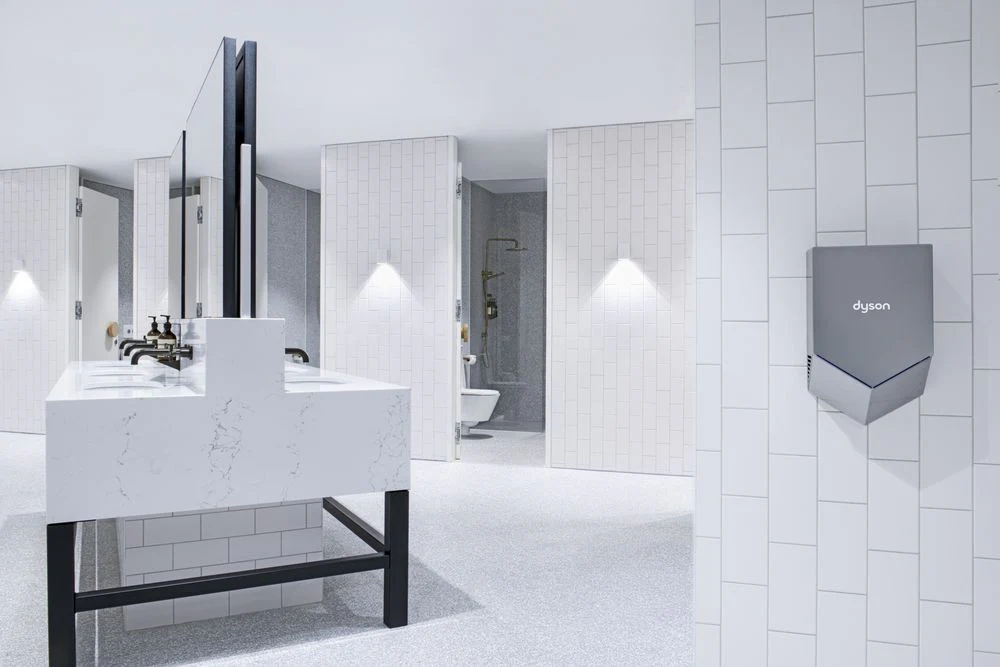
The Airblade V was a major shift because users no longer had to place their hands inside a drying chamber.
Dyson took the Airblade idea and packaged it into a compact wall-mounted dryer that worked in a way almost everyone immediately understood: put your hands underneath it.
That sounds simple, but commercially it opened Airblade to a very different set of restroom layouts.
The V could fit into projects where architects or facility managers wanted Dyson engineering and Airblade-style drying without dedicating the floor and wall space associated with a hands-in machine.
That basic idea ultimately became today's Dyson Airblade V HU02, the Dyson model we most often recommend for general commercial use and especially for high-traffic restroom environments.
Airblade Tap: What If Users Never Left the Sink?
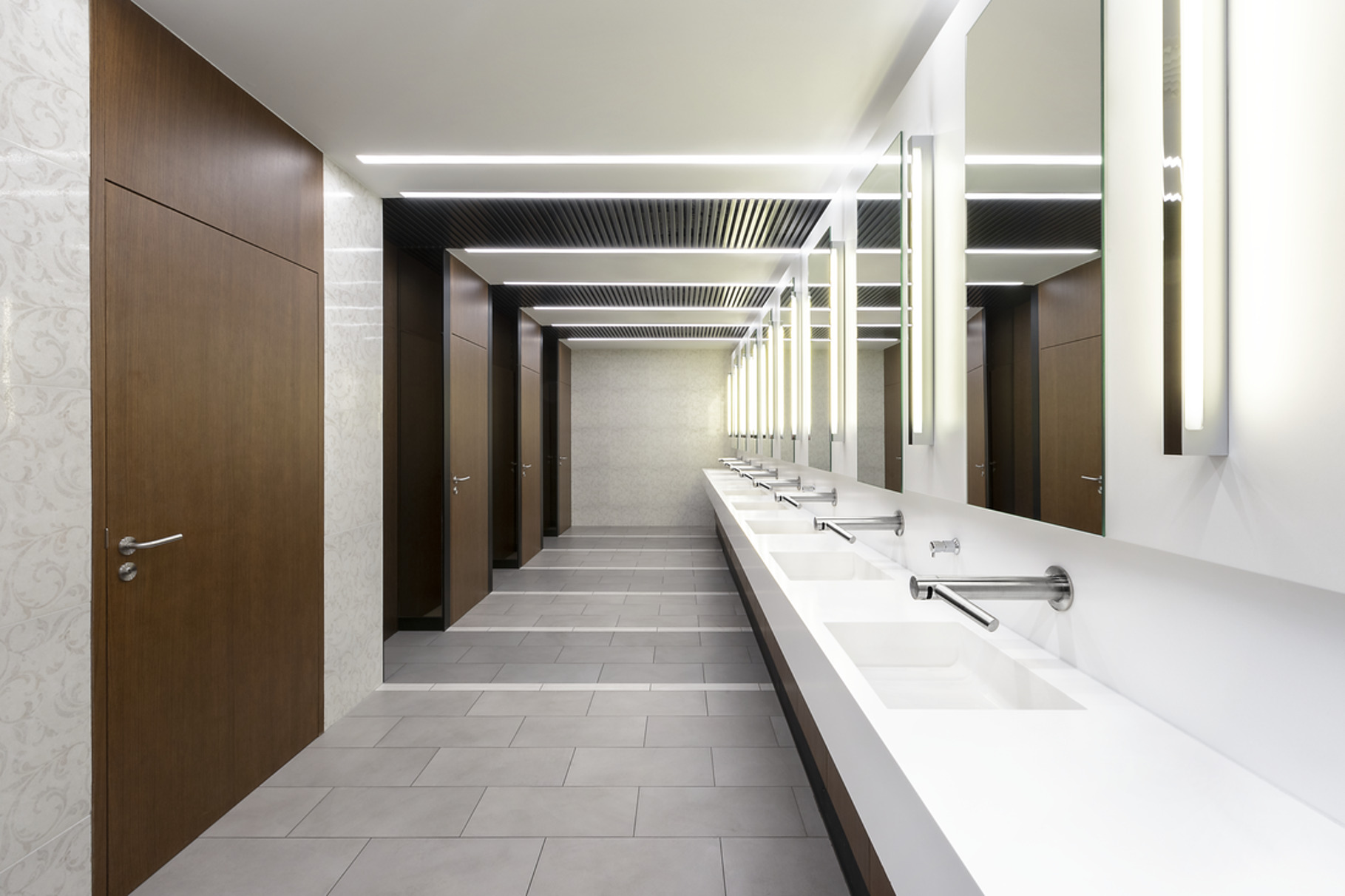
The Airblade Tap took the concept in an entirely different direction.
Instead of putting a faucet at the sink and a separate hand dryer somewhere else in the restroom, Dyson combined the two functions at the basin.
Users could wash their hands and then move them slightly to activate the drying airflow without walking away from the sink.
The concept later became the Dyson Airblade Wash+Dry.
From a restroom-design standpoint, the appeal is obvious: water removed from the hands can stay closer to the basin rather than being carried across the restroom toward a wall-mounted dryer.
But it also changed the buying decision completely.
This wasn't simply another hand dryer to hang on a wall. Plumbing, electrical service, sink geometry, basin compatibility and overall restroom layout became part of the specification.
Airblade dB AB14: Refining the Design That Started It All
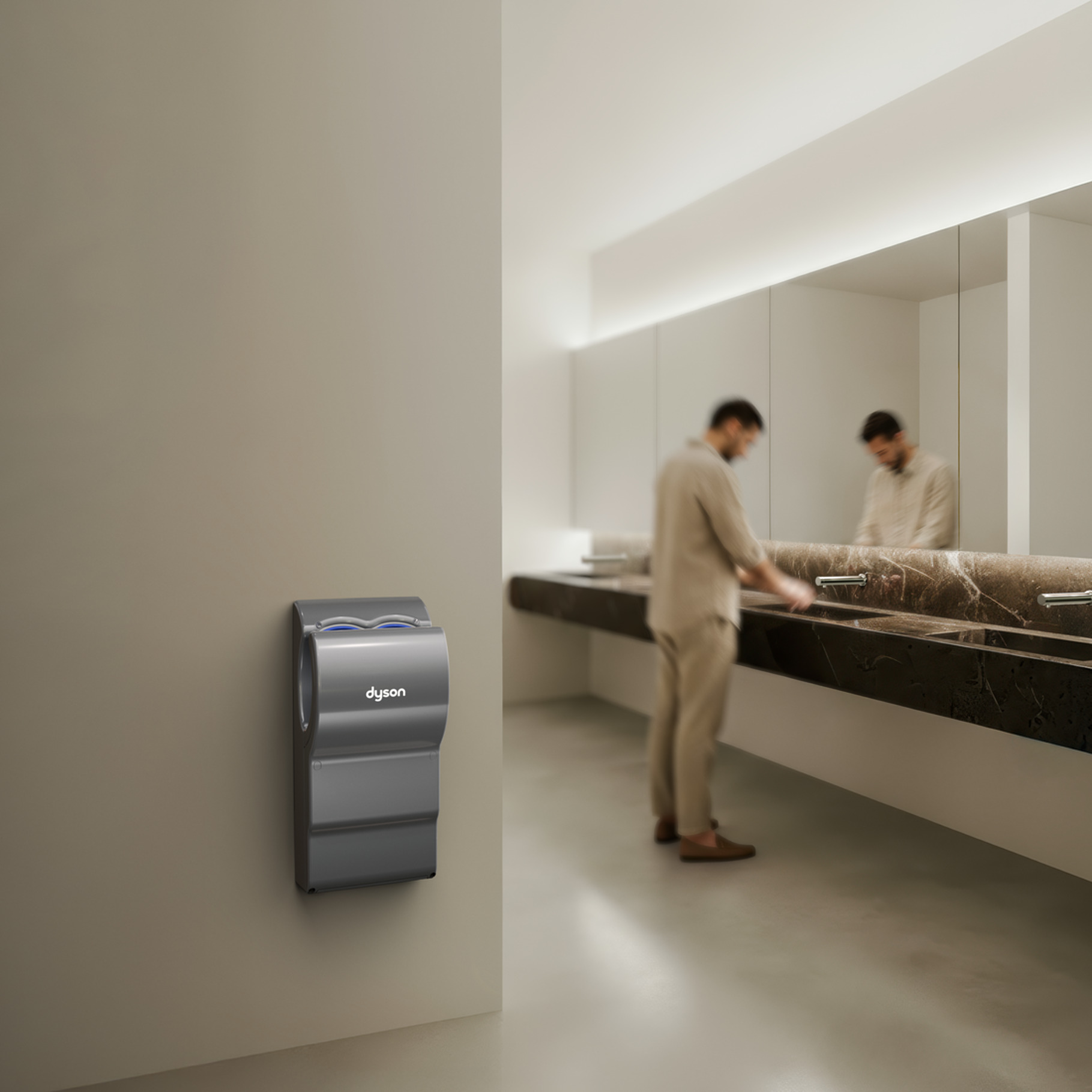
While Dyson experimented with hands-under and sink-integrated formats, it didn't abandon the distinctive hands-in design that built the Airblade name.
The Airblade dB AB14 represented a refinement of that original idea.
Users still lowered their hands into a drying chamber and moved them through concentrated sheets of air. The experience remained unmistakably Airblade.
And that remains the AB14's biggest strength today.
A conventional wall-mounted dryer can disappear into a restroom. The hands-in Airblade rarely does.
For a hotel, executive office, upscale restaurant or another project where the restroom experience itself is part of the design, that can be valuable.
What Stayed Consistent as Airblade Changed?
The shapes changed dramatically. The underlying product philosophy changed much less.
High-speed air became central to the experience.
Airblade dryers are designed around concentrated airflow that removes water quickly rather than relying primarily on prolonged warm-air evaporation.
Filtration became part of the Airblade identity.
HEPA filtration is now a defining feature across the current commercial Airblade family.
The hand dryer became part of restroom design.
Whether hands-in, hands-under or integrated at the sink, Dyson continued treating the dryer as a deliberately designed product rather than an appliance to hide in the corner.
Different formats were allowed to solve different problems.
The product family evolved away from the idea that one Airblade shape had to work everywhere.
The Dyson Airblade Line Today
The easiest way to understand today's Airblade lineup is to see it as the result of those earlier experiments.
| Current Model | Airblade Branch | How We Think About It |
|---|---|---|
| Airblade V HU02 | Compact hands-under | Our preferred all-around Dyson |
| Airblade dB AB14 | Hands-in | The iconic Airblade experience |
| Airblade 9kJ HU03 | Energy-focused hands-under | Choose when energy consumption is the priority |
| Airblade Wash+Dry | Sink-integrated | Architectural solution for washing and drying at the basin |
If you're trying to choose among those products today, this history page is not the place where we want to make you dig through every specification.
We've already done that in our Dyson Airblade Models Compared guide, where we break down the HU02, HU03, AB14 and Wash+Dry based on traffic, installation, energy use and the type of restroom experience you're trying to create.
We've Watched Airblade Evolve Firsthand
ProDryers has specialized in commercial hand dryers since 2003, so we've had a front-row seat for much of the Airblade story.
We've watched the original hands-in design create excitement, watched Dyson expand into compact wall-mounted and sink-integrated formats, and helped customers decide whether those very different designs actually make sense in their facilities.
That's also why our opinions today aren't based only on manufacturer brochures.
We've seen how people interact with these machines, which formats work better in busy environments, what architects tend to specify, and how the products hold up years after installation.
The history matters because today's Airblade lineup makes more sense when you understand why each design exists.
Quick Answers About Dyson Airblade History
When did the Dyson Airblade V come out?
Dyson identifies 2013 as the introduction year for the Airblade V. The design brought Airblade technology into a much smaller hands-under wall-mounted format.
What happened to the Dyson Airblade Tap?
The sink-integrated Airblade concept continued as the Dyson Airblade Wash+Dry. The underlying idea remained the same: allow users to wash and dry their hands at the basin instead of walking to a separate hand dryer.
Is the original hands-in Dyson Airblade still available?
The original Airblade changed over time, but the hands-in concept survived. The Airblade dB AB14 carries on the distinctive drying-chamber format associated with the early Airblade line.
Which current Dyson Airblade does ProDryers recommend most often?
The Dyson Airblade V HU02. For most commercial restrooms, and especially when traffic flow matters, its compact hands-under design is the Dyson we tend to recommend first.
About this article: This page was originally published as news coverage of new Dyson Airblade products. It was substantially updated in 2026 to reflect the history and evolution of the Airblade product line rather than presenting decade-old products as new introductions. ProDryers has specialized in commercial hand dryers since 2003 and is an authorized Dyson distributor. Product specifications and manufacturer offerings can change; always confirm current documentation before specifying equipment.
Anthony DiCicco is the founder and CEO of Category Five Technologies and ProDryers. Since 2003, he has worked in the commercial hand dryer industry, helping businesses, architects, contractors and facility professionals compare and specify hand drying solutions. His recommendations are based on more than two decades of firsthand product, customer and commercial restroom experience. Meet Anthony and the ProDryers team.