
Hand Dryer Cost Savings Calculator
Commercial hand dryers can significantly reduce restroom operating costs by eliminating the ongoing expense of paper towels. For busy facilities, those savings can add up quickly when you factor in paper towel purchases, dispenser refills, custodial labor, trash liners, waste removal, and storage.
Modern commercial hand dryers also vary considerably in energy consumption, drying time, heat settings, and operating cost. A hand dryer cost savings calculator can help facility managers compare those expenses against their current paper towel costs and estimate the potential long-term savings of making the switch.
ProDryers Hand Dryer Cost Savings Calculator
Compare the estimated annual cost of paper towels with the operating cost of a commercial hand dryer. Enter your facility's actual information whenever possible for the most useful estimate. ProDryers does not inflate savings with assumed labor or disposal costs; optional operating costs are included only when you enter them.
Current Paper Towel Costs
Hand Dryer
Use the hand dryer's specification sheet for wattage and published dry time. If a dryer has adjustable heat or motor settings, use the values that most closely match the intended configuration.
Optional: Include Additional Operating Costs
These fields default to $0 so ProDryers does not assume costs your facility may not actually incur.
Long-Term Savings After Equipment & Installation
| Period | Estimated Net Savings |
|---|---|
| 1 Year | $0 |
| 5 Years | $0 |
| 10 Years | $0 |
Operating Details
| Annual Hand Dries | 0 |
| Annual Dryer Electricity | 0 kWh |
| Dryer Electricity Cost / 1,000 Hand Dries | $0 |
| Paper Towel Cost / 1,000 Hand Dries | $0 |
How We Calculate Your Savings
Important: This calculator provides estimates for comparison and planning purposes only. Actual costs and savings vary based on restroom traffic, user behavior, paper towel consumption, towel pricing, electricity rates, dryer settings, installation costs, maintenance, equipment life, taxes, shipping, labor, waste disposal, and other facility-specific factors. Manufacturer specifications and actual operating conditions should be used when available.
Calculate Your Potential Hand Dryer Savings
The most accurate savings estimates use your facility's actual restroom traffic, paper towel consumption, paper towel costs, electricity rate, and the specifications of the hand dryer being considered. Use the manufacturer calculators below as a starting point.
Additional Manufacturer Hand Dryer Cost Savings Calculators
Several leading hand dryer manufacturers provide online calculators that allow you to estimate operating costs and potential savings based on your facility's usage.
| Manufacturer | Cost Savings Calculator |
|---|---|
| Excel Dryer | Excel Dryer Hand Dryer Cost Calculator |
| World Dryer | World Dryer Cost Savings Calculator |
| Dyson Airblade | Dyson Airblade Cost Savings Calculator |
Each manufacturer's calculator uses its own assumptions and methodology, so results may vary. Whenever possible, enter your facility's actual costs and usage data rather than relying solely on default values.
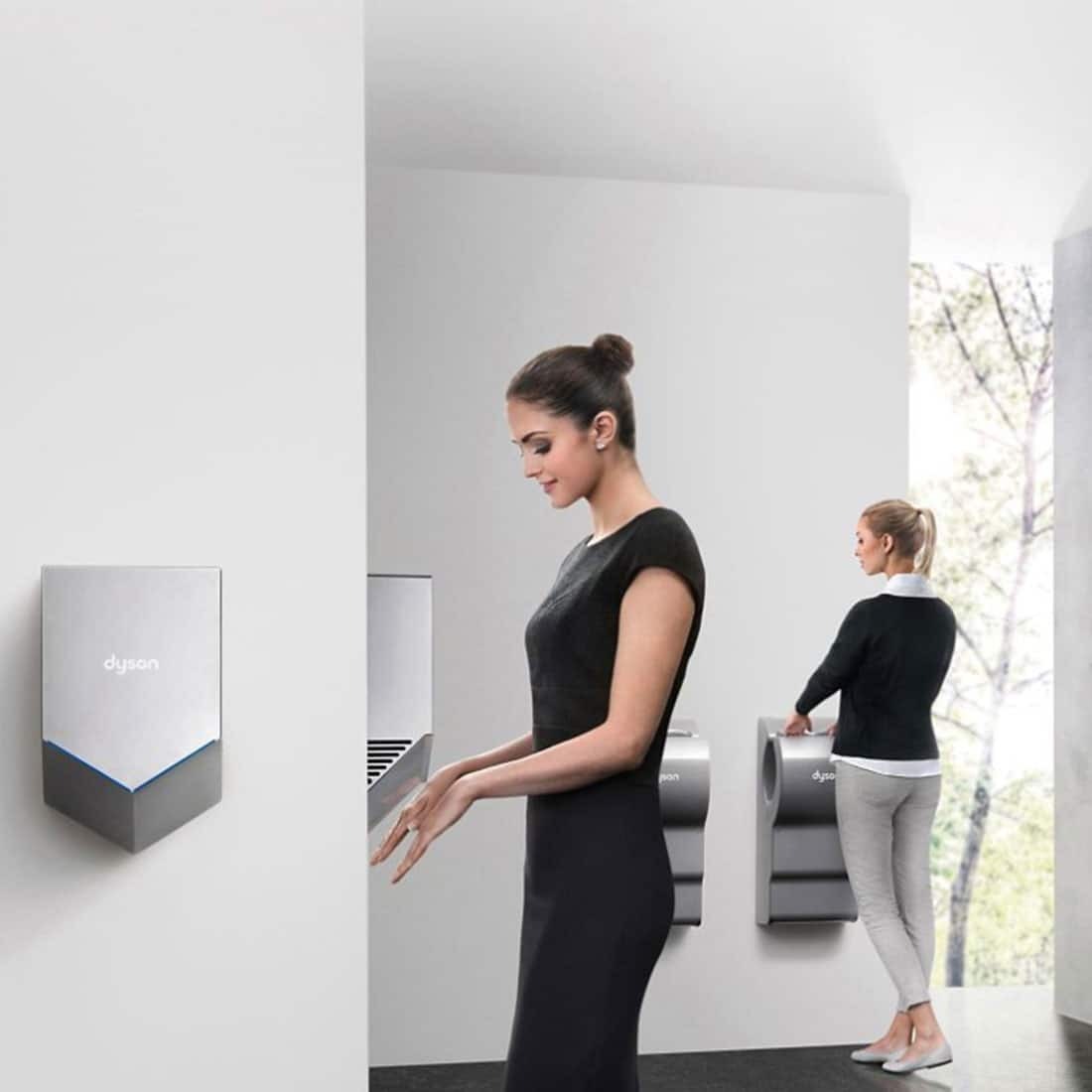
How Much Does a Hand Dryer Cost to Operate?
The cost to operate a commercial hand dryer depends primarily on four factors: power consumption, drying time, restroom traffic, and the facility's electricity rate.
| Cost Factor | Why It Matters |
|---|---|
| Power Consumption | The wattage consumed while the hand dryer is operating. |
| Drying Time | The number of seconds the dryer operates during each hand-drying cycle. |
| Daily Usage | The number of people using the hand dryer each day. |
| Electricity Rate | Your local cost per kilowatt-hour of electricity. |
A powerful hand dryer does not necessarily cost more to operate than a lower-wattage model. Drying time matters too. A hand dryer that completes the drying cycle in 10 to 12 seconds may consume less total electricity per use than a lower-powered dryer that must operate considerably longer.
Basic Hand Dryer Energy Cost Formula
Estimate Electricity Cost
Watts ÷ 1,000 × operating time in hours × electricity rate = approximate electricity cost
Because a hand dryer typically operates for only a few seconds at a time, the electrical cost of an individual drying cycle is generally very small. The calculation becomes more meaningful when multiplied across hundreds or thousands of restroom visits over the course of a year.
Hand Dryers vs. Paper Towel Costs
Comparing hand dryers with paper towels involves more than comparing electricity costs with the price of a case of paper towels. Paper towel systems create recurring purchasing, maintenance, storage, and disposal expenses for as long as the restroom operates.
| Expense | Paper Towels | Hand Dryers |
|---|---|---|
| Consumable Supplies | Ongoing paper towel purchases | None required for drying |
| Energy | No electricity required at the dispenser | Electricity used during each drying cycle |
| Refilling | Regular employee or custodial labor | No refilling required |
| Waste | Trash bags, bins, hauling, and disposal | No paper towel waste |
| Upfront Equipment Cost | Usually relatively low for dispensers | Higher initial purchase and installation cost |
A commercial hand dryer has an upfront equipment and installation cost, but once installed, its primary recurring expense is electricity along with occasional maintenance. In facilities with substantial restroom traffic, eliminating consumable paper products can result in significant long-term operating savings.
What Should You Enter Into a Hand Dryer Savings Calculator?
The more accurate your inputs are, the more useful your savings estimate will be. Most hand dryer cost calculators ask for some combination of the following information:
- Number of restroom users: Estimated daily or annual hand-drying events.
- Paper towels used per person: Many restroom users take more than one towel per hand dry.
- Paper towel cost: Your actual case price provides the best comparison.
- Electricity rate: Typically expressed as your cost per kilowatt-hour.
- Hand dryer wattage: The electrical power consumed during operation.
- Dry time: How long the hand dryer typically operates per use.
- Number of hand dryers: The quantity required for the facility.
Some calculators may also account for installation costs, maintenance, expected equipment life, paper towel storage, custodial labor, or disposal expenses.
Heated vs. No-Heat Hand Dryer Operating Costs
One of the biggest factors affecting hand dryer energy consumption is the heating element. Traditional hand dryers commonly use electricity both to operate the motor and to heat the air. Many newer high-speed hand dryers are designed to dry hands quickly with high-velocity airflow while relying less on supplemental heat.
Some models also allow the heating element to be reduced or turned off. This can lower electricity consumption while still providing fast drying performance.
Energy-Saving Tip
When comparing dryers, look at both wattage and dry time. Lower wattage alone does not tell you the total energy used per hand dry. Facilities focused on minimizing operating costs can also compare our energy-efficient hand dryers.
How Quickly Can a Hand Dryer Pay for Itself?
The payback period for a commercial hand dryer depends largely on how much the facility currently spends on paper towels and how frequently its restrooms are used.
A low-traffic office may experience gradual savings, while a busy school, airport, stadium, restaurant, manufacturing facility, entertainment venue, or public building may eliminate a much larger annual paper towel expense.
Simple Hand Dryer Payback Formula
Installed Hand Dryer Cost ÷ Estimated Annual Savings = Approximate Payback Period
For example, if a hand dryer installation costs $1,000 and is estimated to reduce restroom operating expenses by $500 per year, the approximate payback period would be two years. After that point, continuing savings can contribute directly to lower restroom operating costs.
Actual results will vary based on facility traffic, paper towel usage, electricity rates, product selection, installation expenses, maintenance, and other operating factors.
Choosing a Hand Dryer Based on Operating Cost
Operating cost is important, but it should not be the only factor used when selecting a commercial hand dryer. Facilities should also compare drying speed, restroom traffic, durability, noise, ADA requirements, electrical requirements, warranty coverage, maintenance, vandal resistance, and overall user experience.
| Feature | Why It Matters to Operating Cost |
|---|---|
| Dry Time | Shorter cycles can reduce energy used per hand dry. |
| Wattage | Lower electrical demand can reduce energy consumption. |
| Heat Settings | Adjustable or no-heat operation may reduce energy use. |
| Durability | Longer equipment life can improve total lifecycle value. |
| Warranty | Strong warranty coverage can help protect the facility's investment. |
High-speed models such as the XLERATOR hand dryer are designed to reduce drying time, while lower-energy models can further reduce electrical consumption in facilities where operating efficiency is a priority.
Browse our complete selection of commercial hand dryers to compare models, specifications, energy usage, finishes, mounting options, warranties, and manufacturer features.
Frequently Asked Questions About Hand Dryer Costs
Are hand dryers cheaper than paper towels?
In many commercial restrooms, hand dryers can cost considerably less to operate over time because they eliminate the recurring purchase and disposal of paper towels. Actual savings depend on restroom traffic, paper towel prices, electricity rates, equipment cost, installation, and the type of hand dryer selected.
Do hand dryers use a lot of electricity?
Modern hand dryers operate for only a short period during each use. Total electricity consumption depends on wattage, drying time, frequency of use, and whether the dryer uses a heating element.
What makes one hand dryer cheaper to operate than another?
Operating cost is influenced by both wattage and drying time. Lower-energy dryers, dryers with adjustable heat settings, and high-speed models that complete a drying cycle quickly may reduce electricity consumption per use.
How do I calculate the annual cost of a hand dryer?
Estimate the electrical energy consumed during one drying cycle, multiply that amount by the expected number of uses per year, and then multiply the result by your local electricity rate. Manufacturer cost savings calculators simplify this process.
How long do commercial hand dryers last?
Service life varies by manufacturer, model, restroom traffic, operating environment, and maintenance. Commercial-grade hand dryers are designed for repeated use over many years, making durability an important part of any lifecycle cost comparison.
Should I compare hand dryer purchase price or total operating cost?
Total operating cost provides the more complete comparison. A less expensive dryer may consume more electricity, take longer to dry hands, or require replacement sooner, while a higher-quality commercial dryer may deliver better long-term value.
Calculate Your Potential Hand Dryer Savings
Hand dryer cost savings calculators are a useful starting point for comparing the ongoing expense of paper towels with the long-term cost of electric hand drying. For the most accurate estimate, use your facility's actual paper towel consumption, electricity rate, restroom traffic, and equipment requirements.
Need Help Comparing Hand Dryer Operating Costs?
ProDryers has helped facilities select commercial hand dryers for more than two decades. Compare our complete commercial hand dryer lineup or contact our team for help evaluating drying speed, wattage, operating cost, electrical requirements, warranty coverage, and the best hand dryer for your facility.