
Commercial Restroom Inspection Checklist: The Complete Preventive Maintenance Guide
Posted by Tahnee Talley on Jul 28th 2026
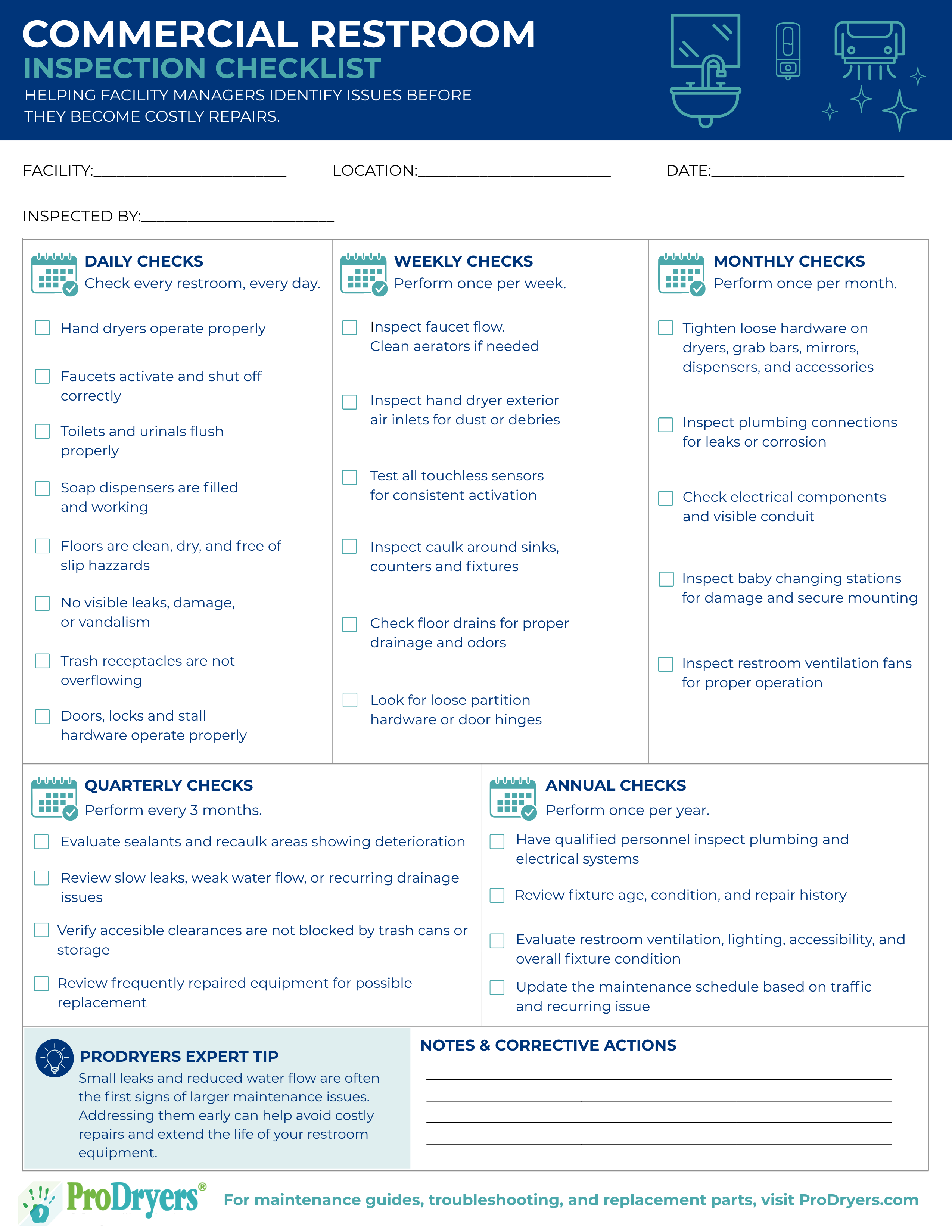
Table of Contents
Select any section to jump directly to it.
Whether you manage a school, office building, healthcare facility, restaurant, retail store, or other commercial property, a structured preventive maintenance program helps keep restrooms operating safely and efficiently. It also creates a better experience for employees, customers, students, patients, and visitors who rely on these facilities every day.
This guide explains what to inspect, how often inspections should be performed, and what to look for during each walkthrough. You'll also find a free printable Commercial Restroom Inspection Checklist that can be used to standardize inspections across your facility.
Who Should Use This Guide?
This guide is designed for anyone responsible for maintaining commercial restroom facilities, including:
Facility managers
Maintenance supervisors
Building engineers
Property managers
School maintenance departments
Healthcare facility managers
Custodial teams
Commercial building owners
Whether you're responsible for a single employee restroom or dozens of restrooms across multiple buildings, establishing a consistent inspection routine can help improve reliability, simplify maintenance planning, and extend the life of your restroom fixtures.
Why Preventive Maintenance Matters
Commercial restrooms are among the busiest spaces in most buildings. Every faucet activation, toilet flush, hand drying cycle, and door opening contributes to normal wear over time. Without routine inspections, small issues can easily go unnoticed until they begin affecting restroom performance or user satisfaction.
Many facilities still rely on reactive maintenance, meaning repairs aren't made until someone reports a problem. While this approach may seem efficient, it often leads to higher repair costs, unexpected downtime, and shorter equipment life.
A preventive maintenance program shifts the focus from reacting to problems to identifying them early.
Benefits of routine restroom inspections include:
Fewer emergency repair calls
Longer equipment life
Lower maintenance costs
Improved restroom cleanliness
Better user experience
Reduced downtime
Improved safety
Better accessibility compliance
Preventive maintenance also helps identify recurring problems. If the same faucet repeatedly requires service or a particular hand dryer needs frequent repairs, those patterns may indicate it's time to replace the fixture rather than continue repairing it.
The goal isn't to create more work for your maintenance staff. It's to make inspections consistent so small issues can be corrected before they become larger ones.
Daily Inspection Checklist
Daily inspections are designed to identify issues that restroom users will notice immediately. In many facilities, these walkthroughs can be completed in just a few minutes and often prevent customer complaints before they occur.
Verify Hand Dryers Are Operating Properly
Commercial hand dryers may be used hundreds or even thousands of times each day. During your daily walkthrough, verify that each unit:
Activates quickly when hands are placed under the sensor
Produces consistent airflow
Shuts off shortly after hands are removed
Operates without unusual vibration or excessive noise
Changes in sound or performance don't always indicate an immediate failure, but they can be an early sign that the dryer should be inspected more closely.
Confirm Faucets Activate and Shut Off Correctly
Touchless faucets should respond consistently and provide a steady stream of water throughout each activation cycle.
During your inspection, verify that each faucet:
Activates promptly
Shuts off correctly after use
Produces an even water stream
Shows no signs of leaking around the base
Remains securely mounted
If you notice reduced water flow or an uneven spray pattern, inspect the aerator before assuming the faucet itself requires repair. Mineral buildup is a common cause of reduced performance, particularly in areas with hard water.
Check Toilets and Urinals for Proper Flushing
A properly functioning flush valve supports both restroom cleanliness and water conservation.
Watch for signs such as:
Continuous running water
Weak or incomplete flushes
Slow refill times
Leaking flush valves
Loose manual handles or touchless sensors
Even small leaks can waste a surprising amount of water over time. Identifying these issues early can help avoid unnecessary water usage and plumbing repairs.
Verify Soap Dispensers Are Filled and Functioning
An empty or malfunctioning soap dispenser immediately affects the user experience and can discourage proper hand hygiene.
During your walkthrough, confirm that each dispenser:
Contains adequate soap
Dispenses consistently
Shows no visible leaks
Remains securely mounted
Facilities with multiple dispenser styles may benefit from standardized refill schedules to reduce the chance of units being overlooked.
Inspect Floors for Slip Hazards
Restroom floors should always be clean, dry, and free of conditions that could create a slipping hazard.
Look for:
Standing water
Soap residue
Damaged flooring
Missing grout
Floor drain backups
Other trip or slip hazards
Water collecting near sinks or toilets may indicate a developing plumbing issue rather than a cleaning concern. Determining the source early can help prevent more extensive damage.
Look for Visible Damage or Vandalism
A quick visual inspection often reveals issues that individual fixture checks may miss.
Take a moment to scan the entire restroom for:
Broken accessories
Damaged partitions
Cracked mirrors
Graffiti
Loose wall-mounted fixtures
Water stains
Ceiling damage
Many of these problems are inexpensive to correct when addressed promptly but can become more involved if ignored.
Check Trash Receptacles
Overflowing trash receptacles affect both cleanliness and the overall appearance of a restroom.
Verify that receptacles:
Have adequate capacity remaining
Show no visible damage
Are securely positioned or mounted
Do not interfere with accessible pathways or clear floor space
If one restroom consistently experiences overflowing trash, it may be worth adjusting collection schedules rather than increasing cleaning frequency alone.
Test Doors, Locks, and Stall Hardware
Doors and partition hardware receive constant daily use and are among the most frequently serviced restroom components.
Verify that:
Entry doors open and close smoothly
Stall doors latch securely
Hinges remain tight
Door closers operate properly
Privacy hardware functions correctly
Addressing loose hardware early helps prevent larger repairs while maintaining privacy and a positive user experience.
Daily Inspection Checklist at a Glance
| Inspect | What to Verify |
|---|---|
| Hand Dryers | Proper operation, airflow, unusual noise or vibration |
| Faucets | Sensor response, water flow, leaks, secure mounting |
| Toilets & Urinals | Proper flushing, leaks, refill time |
| Soap Dispensers | Soap levels, dispensing, leaks, secure mounting |
| Floors | Clean, dry, free of slip hazards |
| Restroom Condition | Damage, vandalism, loose fixtures |
| Trash Receptacles | Capacity, placement, condition |
| Doors & Stall Hardware | Doors, locks, hinges, privacy hardware |
For quick reference, here's what should be included in your daily restroom walkthrough:
Weekly Inspection Checklist
Daily walkthroughs help identify problems that immediately affect restroom users. Weekly inspections take a closer look at fixture performance and developing maintenance issues that may not be obvious during a quick visual check.
These inspections don't require specialized tools or extensive disassembly. Instead, they focus on identifying gradual changes in performance so maintenance can be scheduled before equipment becomes unreliable.
Inspect Faucet Water Flow
A touchless faucet may still activate normally while showing early signs of restricted water flow. During your weekly inspection, observe the water stream from each faucet rather than simply confirming that it turns on.
Verify that each faucet:
Produces a steady, even stream
Maintains consistent water pressure
Doesn't spray sideways or unevenly
Activates and shuts off normally
Reduced flow is commonly caused by mineral buildup inside the aerator, particularly in areas with hard water. If only one faucet is affected while nearby fixtures operate normally, the aerator is often the first component worth inspecting.
Before assuming a faucet requires repair, clean the aerator according to the manufacturer's maintenance recommendations.
Inspect Hand Dryer Air Intake Openings
Many high-speed commercial hand dryers pull room air through intake openings before directing it through the drying chamber.
Although these openings don't require extensive maintenance, they should be inspected regularly for visible debris that could restrict airflow.
Look for:
Dust accumulation
Lint
Paper fibers
Cobwebs
Other visible debris around the intake openings
If cleaning is needed, always follow the manufacturer's maintenance instructions. Avoid inserting tools or objects into the dryer housing or attempting maintenance procedures that require opening the unit unless specifically recommended by the manufacturer.
Keeping intake openings clear helps support consistent airflow and allows the dryer to operate as designed.
Test All Touchless Sensors
Modern commercial restrooms often rely on sensor-operated fixtures for improved hygiene and water conservation.
A weekly function test helps identify intermittent issues before restroom users begin reporting them.
Test the sensors on:
Hand dryers
Faucets
Soap dispensers
Automatic flush valves
Each fixture should activate promptly and respond consistently during normal use.
If a sensor occasionally fails to respond, requires repeated hand movements, or activates unexpectedly, additional troubleshooting may be needed. Dirty sensor windows, depleted batteries (where applicable), or improper sensor settings can all affect performance.
When testing multiple fixtures, consistency is just as important as operation. If one faucet activates immediately while another requires several attempts, it's worth investigating before the problem becomes more noticeable.
Inspect Caulk Around Sinks and Countertops
Caulk helps prevent water from reaching the wall or countertop behind restroom fixtures. Over time, exposure to moisture, cleaning chemicals, and normal building movement can cause sealants to deteriorate.
Inspect caulk around:
Sinks
Countertops
Backsplashes
Counter-mounted fixtures
Look for signs of deterioration such as:
Cracks
Gaps
Separation from adjoining surfaces
Missing sections
Persistent mold or mildew that cannot be removed through normal cleaning
Replacing deteriorated caulk before water intrusion occurs can help protect surrounding finishes and reduce the likelihood of more extensive repairs.
Check Floor Drains
Floor drains play an important role in keeping commercial restrooms clean and safe, but they're often overlooked until drainage problems develop.
During your weekly inspection, verify that floor drains:
Drain properly
Are free of visible debris
Don't have standing water around the drain
Don't produce persistent odors
A slow-draining floor drain may indicate debris buildup that can often be addressed before it develops into a blockage.
If standing water is consistently present, determine whether the source is the drain itself or another plumbing issue nearby.
Inspect Restroom Partitions and Stall Hardware
Restroom partitions and stall hardware are among the most heavily used components in a commercial restroom. Loose hinges, damaged latches, or misaligned doors may seem minor, but they can quickly affect both functionality and user privacy.
Inspect each stall to verify that:
Doors open and close smoothly
Latches engage securely
Hinges remain tight
Coat hooks are firmly attached
Partition panels are stable
Hardware shows no signs of excessive wear
Many partition hardware repairs require only minor adjustments when identified early, making this one of the easiest preventive maintenance tasks to perform during routine inspections.
Why Weekly Inspections Matter
Most equipment failures don't happen suddenly—they develop gradually over time.
A faucet with slightly reduced water flow, deteriorating caulk around a sink, or a hand dryer beginning to collect dust around its intake openings may continue operating for weeks before the problem becomes noticeable to restroom users.
Weekly inspections help maintenance teams identify these gradual changes, allowing repairs to be scheduled before they affect restroom performance or lead to more extensive maintenance.
Weekly Inspection Checklist at a Glance
| Inspect | What to Verify |
|---|---|
| Faucets | Even water flow, consistent pressure, proper activation |
| Hand Dryers | Intake openings free of visible debris |
| Touchless Fixtures | Sensors activate consistently on all fixtures |
| Caulk & Sealants | No cracks, gaps, or deterioration |
| Floor Drains | Proper drainage, no standing water or odors |
| Partitions & Stall Hardware | Doors, hinges, latches, hooks, and panels are secure |
Monthly Inspection Checklist
Monthly inspections go beyond routine walkthroughs and focus on the overall condition of restroom fixtures and building systems. These inspections help identify gradual wear, confirm that equipment remains securely installed, and uncover problems that may not be noticeable during daily or weekly checks.
Rather than looking for immediate operational issues, monthly inspections should answer a broader question: Is this equipment continuing to perform as expected, or are there early signs that maintenance or replacement should be planned?
Tighten Loose Wall-Mounted Fixtures
Commercial restroom fixtures are subjected to constant use. Over time, vibration and repeated operation can cause mounting hardware to loosen, even when the fixture itself continues to function normally.
Inspect wall-mounted equipment such as:
Hand dryers
Grab bars
Mirrors
Soap dispensers
Waste receptacles
Other mounted accessories
Verify that each fixture remains secure and doesn't shift during normal use.
Loose hardware rarely improves on its own. Addressing minor movement early helps prevent damage to mounting surfaces and reduces the likelihood of more extensive repairs later.
Inspect Plumbing Connections
Not every plumbing problem is immediately visible to restroom users. Slow leaks can continue unnoticed for weeks before causing staining, damaged cabinetry, or moisture-related issues.
Inspect exposed plumbing beneath sinks and around accessible fixtures.
Look for:
Water stains
Corrosion
Mineral deposits
Loose fittings
Signs of slow leaks
Pay particular attention to supply lines, shutoff valves, drain connections, and compression fittings.
Even a slow drip can waste water and contribute to hidden damage if left unresolved.
Check Electrical Components
Many modern restroom fixtures depend on electrical power, including hand dryers, automatic faucets, touchless flush valves, and lighting.
During your monthly inspection, visually examine accessible electrical components for signs of wear or damage.
Inspect for:
Loose conduit
Damaged wire insulation
Burn marks
Moisture intrusion
Signs of overheating
Routine inspections are intended to identify potential concerns, not perform electrical repairs. Any repairs involving wiring or electrical components should be completed by qualified personnel.
Inspect Baby Changing Stations
Baby changing stations may receive less frequent use than other restroom fixtures, but they should still be inspected regularly to ensure they remain safe and secure.
Verify that each station:
Opens and closes smoothly
Locks securely in both positions
Shows no signs of cracks or structural damage
Remains firmly attached to the wall
Has functional safety straps and hardware
Any changing station showing structural damage or excessive movement should be removed from service until repairs or replacement have been completed.
Monthly Inspection Checklist at a Glance
| Inspect | What to Verify |
|---|---|
| Wall-Mounted Fixtures | Secure mounting, no movement |
| Plumbing Connections | No leaks, corrosion, or loose fittings |
| Electrical Components | No visible damage or moisture intrusion |
| Baby Changing Stations | Safe operation, secure mounting, complete hardware |
Quarterly Inspection Checklist
Quarterly inspections focus less on individual fixtures and more on long-term restroom performance. This is the ideal time to evaluate recurring maintenance issues, inspect building finishes, verify accessibility requirements, and determine whether aging equipment should remain in service.
Unlike daily or weekly inspections, quarterly reviews often involve looking back at maintenance records to identify trends that may not be obvious during routine walkthroughs.
Evaluate Sealants and Recaulk When Needed
Sealants naturally deteriorate over time due to constant exposure to water, cleaning chemicals, and normal building movement.
Inspect sealants around sinks, countertops, backsplashes, and other moisture-prone areas.
Replace sealant if you observe:
Cracking
Separation from adjoining surfaces
Shrinkage
Missing sections
Areas where water could penetrate behind fixtures
Maintaining effective sealants helps protect surrounding building materials and reduces the likelihood of hidden water damage.
Review Recurring Plumbing Issues
One repair doesn't always indicate a larger problem.
However, repeated repairs to the same fixture often suggest that a more permanent solution should be considered.
Review maintenance records and ask questions such as:
Has the same faucet required multiple repairs?
Is one toilet consistently running after flushing?
Are certain sinks repeatedly experiencing drainage issues?
Has one hand dryer required significantly more service than others?
Identifying recurring problems helps maintenance teams prioritize replacements and reduce long-term repair costs.
Verify ADA Clearances
Accessibility should be reviewed periodically, especially in facilities where equipment, waste receptacles, or furniture may have been relocated.
Verify that:
Required clear floor space remains unobstructed.
Trash receptacles and other accessories haven't reduced accessible pathways.
Hand dryers, soap dispensers, and similar accessories remain within accessible reach ranges.
Grab bars remain secure and correctly positioned.
A restroom can gradually become less accessible over time, even if no renovations have been completed.
Inspect Wall Surfaces and Mounting Areas
Even properly installed fixtures rely on sound building materials to remain secure.
Inspect surrounding wall surfaces for:
Cracked tile
Loose wall panels
Soft drywall
Water damage
Rust stains
Damage around mounting locations
Identifying deterioration early helps prevent future fixture failures and may reveal hidden plumbing or moisture issues before they become more extensive.
Review Frequently Repaired Equipment
Every facility has a few fixtures that seem to require ongoing attention.
Quarterly inspections provide an opportunity to determine whether continued repairs are still the best long-term solution.
Consider factors such as:
Repair frequency
Labor costs
Replacement part availability
Equipment age
Expected remaining service life
Sometimes replacing an aging fixture is more economical than continuing to repair it. Looking at the total cost of ownership—not just the cost of the next repair—can lead to better long-term maintenance decisions.
Quarterly Inspection Checklist at a Glance
| Inspect | What to Verify |
|---|---|
| Sealants | No cracks, gaps, or deterioration |
| Recurring Plumbing Issues | Review maintenance history for patterns |
| ADA Compliance | Clearances, reach ranges, and grab bars |
| Wall Surfaces | No moisture damage or deterioration |
| Frequently Repaired Equipment | Evaluate repair history versus replacement |
Annual Inspection Checklist
An annual inspection is less about identifying individual maintenance issues and more about evaluating the restroom as a complete system.
This is an opportunity to review equipment condition, analyze maintenance records, identify aging fixtures, and plan future repairs or replacements before they become urgent.
Perform a Comprehensive Restroom Evaluation
Review the condition of all major restroom components, including:
Hand dryers
Faucets
Soap dispensers
Toilets and urinals
Grab bars
Mirrors
Partitions
Baby changing stations
Lighting
Ventilation
Plumbing systems
Electrical systems
Document fixtures showing excessive wear, recurring failures, cosmetic deterioration, or signs that replacement should be considered during the next maintenance or capital improvement cycle.
Evaluate Aging Equipment
Equipment doesn't need to be completely inoperable before replacement becomes the most practical option.
As fixtures age, repairs often become more frequent, replacement parts may become harder to source, and overall performance may decline.
When evaluating older equipment, consider:
Age
Repair history
Availability of replacement parts
Energy efficiency
Water efficiency
User satisfaction
Planning replacements before failures occur helps avoid emergency purchases and allows budgets to be managed more effectively.
Review Maintenance Records
Maintenance logs provide valuable insight into the overall health of your restroom facilities.
Review records from the previous year to identify:
Frequently repaired fixtures
Recurring plumbing issues
Common user complaints
High-maintenance restroom locations
Opportunities to improve inspection schedules
Patterns that may not be obvious during individual repairs often become clear when viewed over an entire year.
Update Your Preventive Maintenance Program
No maintenance program should remain static.
As buildings age, equipment changes, and restroom usage increases or decreases, inspection schedules should be reviewed and adjusted accordingly.
High-traffic restrooms may benefit from more frequent inspections, while lower-use areas may require fewer routine checks.
A yearly review helps ensure your maintenance program continues to reflect the needs of your facility rather than simply following the same schedule year after year.
Annual Inspection Checklist at a Glance
| Inspect | What to Verify |
|---|---|
| Restroom Fixtures | Overall condition and performance |
| Aging Equipment | Repair history and replacement planning |
| Maintenance Records | Trends, recurring issues, user complaints |
| Maintenance Program | Inspection frequency and future planning |
Common Commercial Restroom Maintenance Mistakes
Even facilities with a well-established maintenance program can develop recurring problems if routine inspections become inconsistent or small issues are overlooked. Most major repairs don't begin as emergencies, they develop gradually over time.
Here are some of the most common preventive maintenance mistakes and how to avoid them.
Waiting Until Equipment Fails
One of the most common maintenance mistakes is waiting for a fixture to stop working before investigating the problem.
Commercial restroom equipment often shows subtle warning signs before it fails completely. A hand dryer may become louder than usual, a faucet may develop reduced water flow, or a flush valve may begin running longer after each use.
Addressing these early indicators allows maintenance to be scheduled on your timeline rather than responding to an unexpected outage.
Ignoring Small Water Leaks
A slow drip beneath a sink or a flush valve that doesn't fully close may seem insignificant, but even minor leaks can waste water, increase utility costs, and contribute to damage that isn't immediately visible.
During routine inspections, investigate signs such as:
Water stains
Mineral deposits
Damp cabinetry
Corrosion
Persistent moisture around plumbing connections
Small plumbing issues are typically much easier—and less expensive—to correct before they lead to structural damage or mold growth.
Overlooking Loose Fixtures
Wall-mounted restroom fixtures experience thousands of uses throughout the year. Even when they continue operating normally, repeated movement can gradually loosen mounting hardware.
Don't overlook movement in:
Hand dryers
Grab bars
Soap dispensers
Mirrors
Waste receptacles
Baby changing stations
Addressing loose hardware early helps protect both the fixture and the wall surface it's mounted to.
Blocking ADA Clearances
Accessibility issues often develop gradually rather than during a renovation.
Trash receptacles, storage carts, cleaning equipment, or temporary displays can unintentionally reduce required clear floor space or obstruct access to restroom fixtures.
During inspections, verify that users can comfortably access sinks, hand dryers, soap dispensers, toilets, and other restroom amenities without unnecessary obstacles.
Repairing the Same Fixture Repeatedly
Every facility has a fixture that seems to generate the same work order again and again.
Rather than focusing only on the cost of each individual repair, periodically evaluate the fixture's overall maintenance history.
If the same faucet, hand dryer, or flush valve requires frequent service, replacing it may be the more economical long-term decision.
How Often Should Commercial Restrooms Be Inspected?
Inspection frequency should be based on how heavily the restroom is used.
A busy airport, school, stadium, or healthcare facility will typically require more frequent inspections than a small office building with limited daily traffic.
The following schedule works well for many commercial facilities.
| Inspection | Typical Frequency | Primary Focus |
|---|---|---|
| Daily | Every day (or multiple times daily in high-traffic facilities) | Cleanliness, safety, immediate operational issues |
| Weekly | Once each week | Fixture performance and developing maintenance concerns |
| Monthly | Once each month | Plumbing, electrical components, mounting hardware |
| Quarterly | Every three months | Long-term wear, accessibility, recurring issues |
| Annual | Once each year | Overall facility condition and replacement planning |
Your maintenance schedule should always be adjusted to match your building's traffic, equipment, and staffing resources.
Frequently Asked Questions
How long should a commercial restroom inspection take?
A daily inspection typically takes between 5 and 10 minutes per restroom. Weekly, monthly, and quarterly inspections require additional time because they involve more detailed evaluations of restroom fixtures and building systems.
The goal isn't to create lengthy inspection routines, it's to identify developing issues before they interrupt normal restroom operation.
Should restroom inspections be documented?
Yes.
Documenting inspections creates a maintenance history that helps identify recurring issues, schedule repairs, and support long-term replacement planning.
Even a simple inspection log can reveal patterns that aren't obvious when work orders are viewed individually.
What if everything appears to be working normally?
That's exactly what preventive maintenance is designed to confirm.
Routine inspections aren't performed because equipment is failing, they're performed to verify that equipment continues operating as expected and to identify gradual wear before it becomes noticeable to restroom users.
Should inspections replace the manufacturer's maintenance recommendations?
No.
This guide provides general preventive maintenance best practices for commercial restrooms, but every fixture is different.
Always follow the installation, maintenance, and service recommendations provided by the equipment manufacturer for your specific products.
How often should faucet aerators be cleaned?
There isn't a universal schedule.
Facilities in areas with hard water may require more frequent cleaning than those with softer water.
Rather than cleaning aerators on a fixed schedule, monitor water flow during routine inspections. If a faucet develops reduced flow or an uneven spray pattern, inspect the aerator according to the manufacturer's recommendations.
Download the Free Commercial Restroom Inspection Checklist
Having a maintenance schedule is helpful.
Having a standardized inspection process is even better.
To make routine inspections easier, we've created a printable Commercial Restroom Inspection Checklist that follows the maintenance schedule outlined in this guide.
Use it to:
Standardize inspections across your facility
Document completed inspections
Record maintenance concerns and follow-up repairs
Identify recurring issues over time
Keep maintenance staff organized and consistent
Final Thoughts
Preventive maintenance isn't about adding more tasks to your maintenance team's schedule, it's about making routine inspections more effective.
A consistent inspection program helps identify small issues before they affect restroom users, supports safer and more reliable facilities, and provides valuable insight into the long-term condition of your equipment.
Whether you're responsible for a single office restroom or managing facilities across multiple buildings, routine inspections can help extend the life of restroom fixtures while making maintenance planning more predictable.
Download the Commercial Restroom Inspection Checklist, customize it for your facility if needed, and use it as part of a consistent preventive maintenance program. A few minutes spent inspecting your restrooms today can help prevent unexpected repairs and unnecessary downtime tomorrow.