
The Most Overlooked Part of Every Stadium Isn't the Scoreboard. It's the Restroom.
Posted by Scott Kerman on Jul 20th 2026
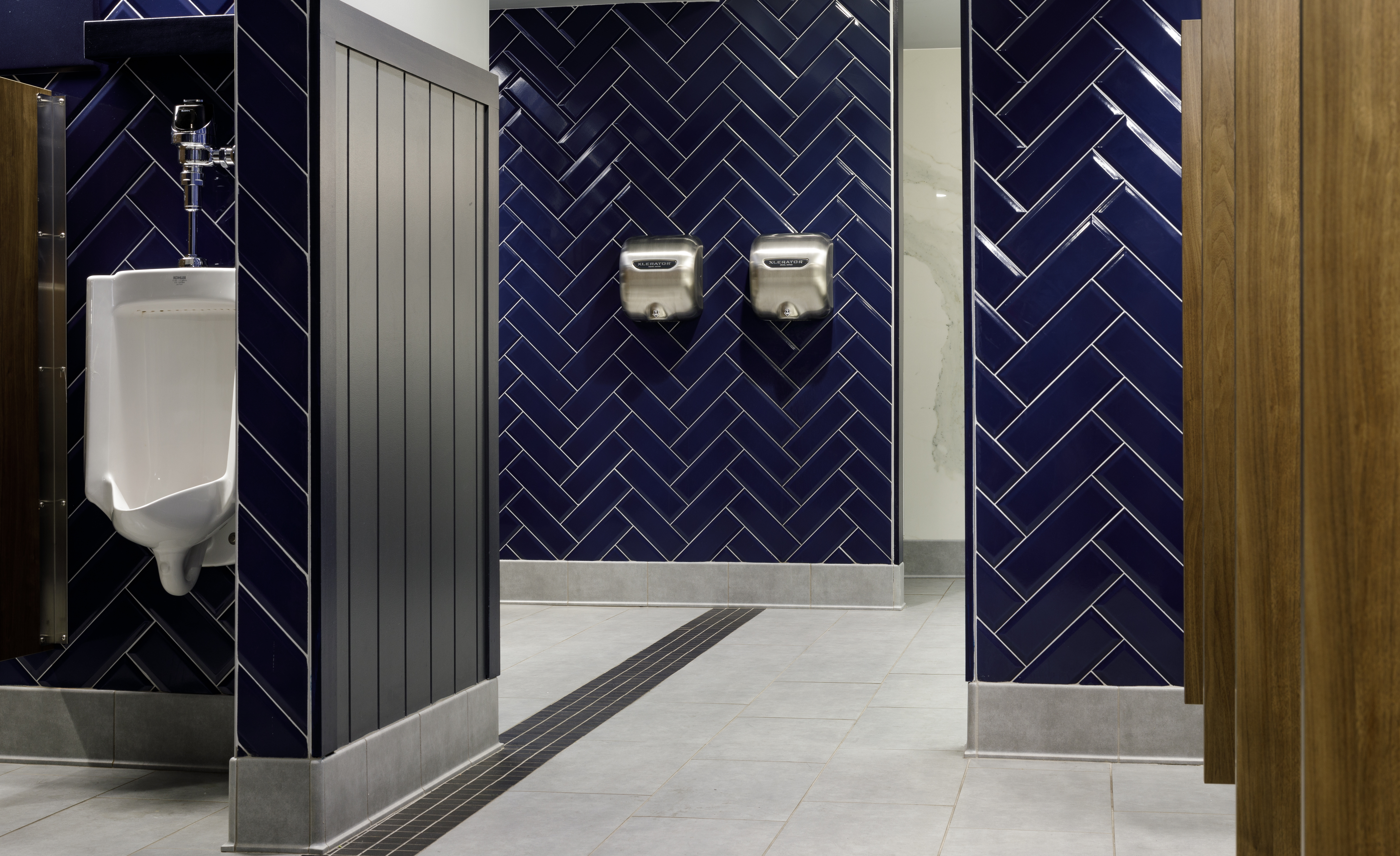
A modern commercial restroom at Gillette Stadium in Foxborough, Massachusetts.
By Scott Kerman
Commercial restroom industry professional since 1989
The Restroom Is Part of the Fan Experience
In a few short weeks, I am going to be 60 years old. Sixty. It does not seem possible.
I attended my first professional sporting event in 1972. I was six years old, and the venue was Olympia Stadium in Detroit, affectionately known as the Old Red Barn. The arena opened in 1927 and closed in 1979 after more than half a century of service.
Today, only hockey historians and native Detroiters are likely to remember it. I have no specific memory of the restrooms, but my educated professional guess is that they looked much the same in 1979 as they did when the building opened 52 years earlier.
At that time, public restrooms were often treated as little more than a building requirement. They existed because they had to. Few people thought of them as part of the entertainment experience, and even fewer considered whether their design affected how visitors felt about the venue.
That approach may have been accepted in the past. It should not be accepted today.
Modern stadiums and arenas compete for visitors in ways their predecessors never did. Fans expect comfortable seating, clear sightlines, impressive scoreboards, reliable wireless service, quality food, clean concourses, easy navigation and an overall experience worth the rising price of admission.
The restroom belongs on that list.
A public restroom is not separate from the guest experience. It is one of the most frequently used parts of it.
From the 700 Level to Today’s Modern Stadiums
I spent many summer nights and autumn Sunday afternoons during the late 1970s and early 1980s at Veterans Stadium in Philadelphia. Many of those days were spent in the notorious 700 Level, the least expensive seats in the building and an area remembered as much for its behavior as for its view of the field.
The 700 Level developed a reputation for hostile taunting, fighting, public urination and general strangeness. Excess beer consumption occasionally led some fans to treat restroom sinks as additional capacity whenever the urinals and toilets were occupied.
Based on those formative experiences, I might seem like one of the least likely people to discuss public restroom hygiene. Yet I have worked with commercial restroom products since 1989 and have spent much of my career focused on hand drying equipment.
Over the years, I have represented World Dryer, Excel Dryer, Mitsubishi Jet Towel and Airdri. I have worked with architects, facility managers, distributors, contractors, engineers and building owners throughout North America.
That experience changed the way I look at public buildings. I rarely enter a stadium, arena, airport, school or convention center without noticing its restrooms. I notice how people move through them, where lines form, whether fixtures are working, whether supplies are available and whether the room appears to have been designed for the people actually using it.
I have seen impressive buildings with disappointing restrooms. I have also seen modest facilities where careful restroom planning quietly improved the entire visitor experience.
Ticket Prices Changed. Did the Restroom Experience?
On October 21, 1980, the Philadelphia Phillies won their first World Series championship. A ticket to Game 6 in the 700 Level cost $15. During the regular season, tickets in that section sold for only $3.
Almost half a century later, even an inexpensive ticket to a regular-season game can cost several times that amount. Premium games, parking, food and other expenses increase the cost considerably.
Today’s fans pay more and expect more. Seats are more comfortable. Sightlines are better. Video boards are enormous. Food options extend far beyond hot dogs, peanuts and beer. Many venues have clubs, restaurants, mobile ordering, cashless payment systems and entertainment throughout the concourse.
But is the public restroom experience dramatically better?
In some venues, it certainly is. Newer facilities have incorporated better lighting, touchless fixtures, improved privacy, family restrooms, wider circulation paths and more durable materials.
In too many others, however, the restroom still feels stuck in the past. Lines become overwhelming during halftime or intermission. Soap dispensers sit empty. Paper towels run out. Trash containers overflow. Wet floors create an unpleasant appearance and potential safety concerns. Visitors leave with wet hands because the drying system could not keep up with demand.
That is not a minor operational inconvenience. It is part of what the visitor remembers about the building.
The Halftime Rush Changes Everything
A stadium restroom does not operate like an office restroom.
In an office building, restroom traffic is generally distributed throughout the day. In a stadium or arena, thousands of people may leave their seats at nearly the same moment. They want to use the restroom, purchase food and return before play resumes.
That creates a short period of extraordinary demand.
Every part of the restroom must support movement. Entrances should be easy to find. Walking paths should be intuitive. The number and placement of fixtures must reflect actual peak use. Handwashing and hand drying stations should not create a bottleneck near the exit.
This is where design decisions that seem insignificant on a drawing can become major operational problems after opening day.
A poorly positioned dispenser can interrupt traffic. A narrow exit can force people to cross paths. Too few drying stations can create another line after visitors have already waited for a sink. Paper towels may work adequately at ordinary times but become unavailable quickly when thousands of people use the restroom within a single period.
The stadium restroom challenge
A stadium restroom must handle unusually heavy traffic within a very short window. Successful design is not only about fixture count. It is about helping large numbers of people enter, use the facilities, wash, dry and exit without unnecessary delays.
When the Paper Towels Run Out
One restroom problem has persisted from the stadiums of my childhood through many venues today: empty paper towel dispensers.
When a dispenser becomes empty before halftime or intermission ends, visitors are left with limited options. They wipe their hands on their clothing, search for napkins at a concession stand or simply walk away with wet hands.
Meanwhile, discarded towels accumulate around sinks, on counters and across the floor. Trash containers fill quickly. Maintenance personnel must refill dispensers, empty waste receptacles and clean up the surrounding area during one of the busiest periods of the event.
Modern high-speed commercial hand dryers can help address that challenge by providing a continuously available drying option that does not depend on refilling paper supplies.
That does not mean every hand dryer is appropriate for every stadium. Product selection still matters. Drying time, sound, durability, electrical requirements, traffic volume, accessibility, placement and maintenance all need to be evaluated.
The goal should not be to install a particular product simply because it appears modern. The goal should be to create a drying system capable of supporting the environment in which it will operate.
Touchless Technology Is Only Part of the Answer
Touchless fixtures have become increasingly common in commercial restrooms. Sensor-operated faucets, soap dispensers, flush valves and hand dryers can reduce the need to touch shared surfaces and help make the restroom feel more current.
Technology alone, however, does not create a good restroom.
A sensor-operated fixture that activates inconsistently will frustrate users. A beautiful sink with poor drainage will create standing water. A powerful hand dryer installed in the wrong location can disrupt traffic. A touchless soap dispenser that is empty offers no hygiene benefit at all.
Successful restroom design requires the fixtures, room layout and maintenance plan to work together.
Owners and architects should ask practical questions before finalizing the design:
- Can visitors move through the room easily during peak periods?
- Are washing and drying areas positioned to prevent congestion?
- Can maintenance personnel reach equipment and supplies quickly?
- Will the fixtures tolerate the volume and behavior expected in the venue?
- Are the controls intuitive for children, older adults and visitors with disabilities?
- What happens when thousands of people use the room within 15 minutes?
Those questions may not appear exciting compared with choosing seats, scoreboards or club finishes. They are nevertheless essential to how the building performs.
Privacy and Practical Details Matter
Public restroom expectations have changed substantially during my career.
Visitors expect greater privacy. Toilet compartments should minimize sightlines. Doors, panels and hardware should be durable enough for heavy use. Family and companion-care restrooms should be available and easy to locate.
Small details also matter more than many designers realize.
Shelves near urinals or inside compartments can give visitors a safe place to set a drink, phone or personal item. Hooks can prevent coats and bags from ending up on the floor. Adequate counter space can reduce clutter around lavatories. Clear signage can help visitors locate accessible or family facilities without searching through the concourse.
None of these features will appear on the scoreboard. They will not receive attention during the opening ceremony. Yet they influence how visitors feel about the care and thought invested in the building.
Designing for the Maintenance Team
A restroom can look impressive on opening day and still be difficult to operate.
Maintenance teams understand this better than anyone. They know which dispensers require constant attention, which surfaces are difficult to clean, which fixtures are frequently damaged and which replacement parts are difficult to obtain.
Their experience should be considered during the design and specification process, not after the restroom is already built.
The lowest initial product price does not always create the lowest long-term cost. A fixture that requires frequent service, consumes excessive supplies or experiences repeated downtime may cost the facility far more over its useful life.
Likewise, a product selected solely because it has the most impressive specification sheet may not be the best choice for the people responsible for maintaining it.
Good design balances appearance, performance, maintainability and long-term ownership cost.
A lesson from decades in the industry
The best commercial restroom products are not simply the ones that look good when installed. They are the ones that continue to perform when the building is full, the maintenance team is busy and thousands of people are depending on them.
The Best Restroom May Be the One Nobody Remembers
Fans rarely leave a stadium talking about a restroom that worked well.
That is exactly the point.
The best restroom experience is often invisible. The lines move. The fixtures work. Soap is available. Water stays where it belongs. Hands dry quickly. Waste is controlled. Visitors return to their seats without giving the restroom another thought.
A bad restroom creates the opposite reaction. It becomes a story. Visitors remember the long wait, the empty dispenser, the dirty floor or the fixture that would not operate. Those experiences become part of how they judge the entire venue.
Restrooms matter in the same way seat width matters. They matter like scoreboard visibility, acoustics, parking, concessions and every other detail that shapes the visit.
They may matter to more people than almost any single concession item. Based on human physiology and the length of the average concert or sporting event, a large percentage of guests will visit the restroom at least once during their time in the building.
Every one of those visits represents an opportunity for the venue to either meet expectations or disappoint.
What Does Your Restroom Say About Your Venue?
To every team owner, architect, facilities professional, contractor and industry colleague who has shared time and knowledge with me since the 1980s, I remain grateful.
The commercial restroom industry has changed considerably during that time. Fixtures are faster, more efficient and more technologically advanced. Expectations for accessibility, privacy, hygiene and overall design have also risen.
But one truth has remained consistent.
The public restroom matters.
It matters to the fan trying to return before the next period begins. It matters to the parent helping a child. It matters to the visitor with a disability. It matters to the maintenance team responsible for keeping the facility operating. It matters to the owner whose brand is represented by every part of the building.
After more than three decades in this industry, I have come to believe that the real measure of great restroom design is not the individual products. It is the experience those products quietly create.
When everything works, visitors can wash, dry and return to the event without interruption.
That is what a modern stadium restroom should accomplish.
What does your restroom say about your venue?
Planning a High-Traffic Restroom Project?
ProDryers helps facility managers, architects, contractors and building owners evaluate commercial hand drying options for stadiums, arenas and other high-traffic facilities.
Explore Commercial Hand DryersAbout Scott Kerman
Scott Kerman has worked in the commercial restroom industry since 1989 and has represented several of the world’s leading hand dryer manufacturers, including World Dryer, Excel Dryer, Mitsubishi Jet Towel and Airdri. Throughout his career, he has worked with architects, engineers, facility managers, distributors, contractors and building owners across North America. Scott now works closely with the ProDryers team, sharing practical insights gained from decades of firsthand industry experience.
Editor’s Note
This article reflects Scott Kerman’s personal observations from nearly four decades in the commercial restroom industry. Product technology and facility expectations have changed substantially during that time, but the goal remains the same: creating reliable, hygienic and better-designed public restrooms for everyone.
Frequently Asked Questions