
Hand Dryers vs. Paper Towels: Cost, Hygiene, and Sustainability Compared
When it comes to keeping restrooms clean and efficient, the debate of hand dryers vs paper towels has been ongoing for decades. Businesses, schools, and public facilities are rethinking which option makes the most sense as concerns about cost, hygiene, and sustainability continue to grow.
So, which should you choose: hand dryers or paper towels? Let’s break down the pros and cons of both and explain why modern energy-efficient hand dryers are becoming the clear choice.
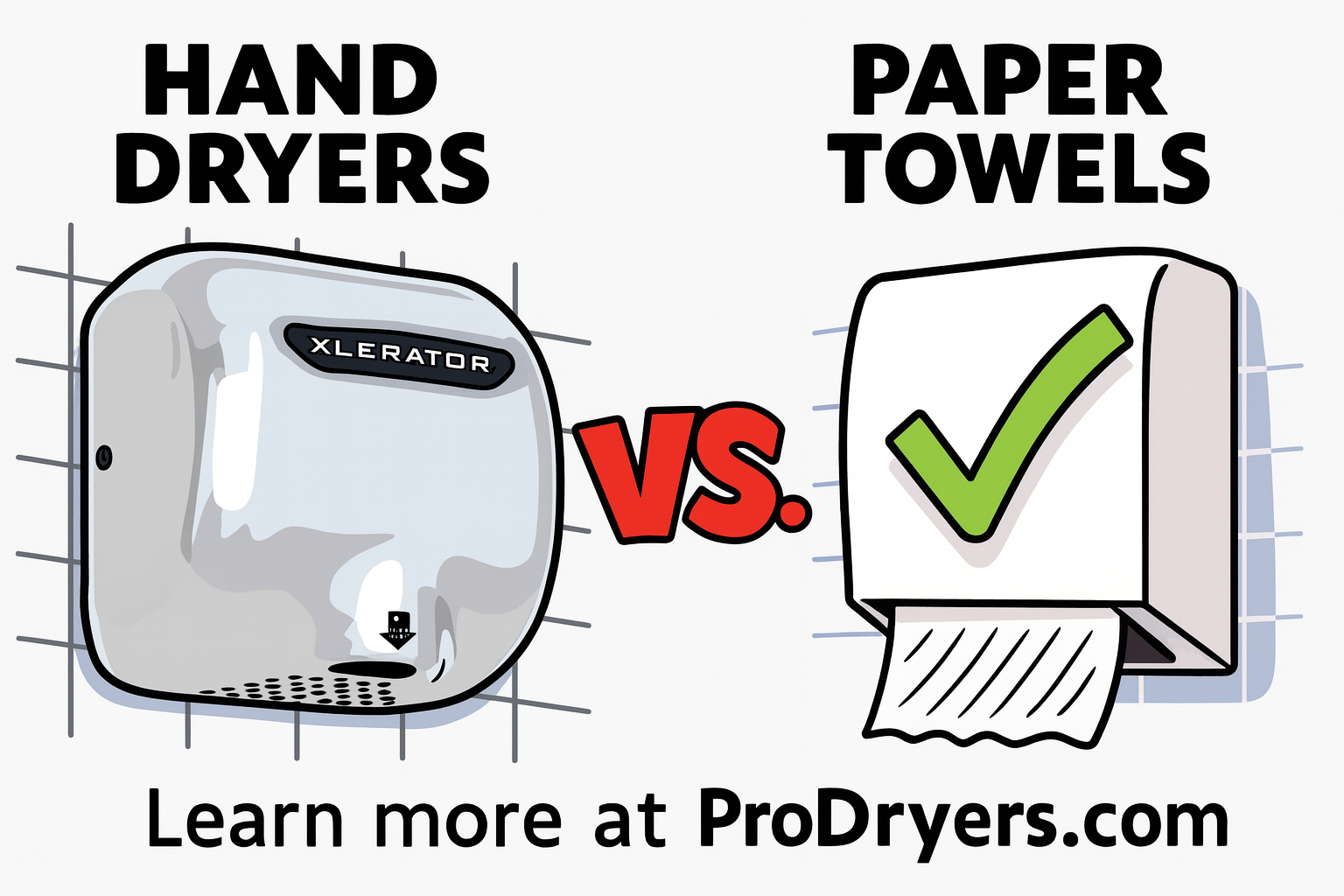
Hand Dryers vs. Paper Towels: Quick Comparison
|
Factor |
Hand Dryers |
Paper Towels |
|---|---|---|
|
Cost |
One-time purchase, minimal maintenance |
Constant purchasing, restocking, and disposal costs |
|
Hygiene |
Touchless operation, HEPA filters available |
Effective, but bins can overflow and spread bacteria |
|
Environmental Impact |
Saves trees, reduces landfill waste, lower carbon footprint |
Requires deforestation, water-intensive production, adds to landfill waste |
|
Convenience |
Always available, dries hands in 8–12 seconds |
Runs out frequently, needs constant attention |
|
Longevity |
Can last 7–10 years |
Single-use, requires continuous replenishment |
Environmental Impact: The Clear Difference
The production of paper towels takes a heavy toll on the environment. Manufacturing one ton of paper towels can require as much as 20,000 gallons of water and the process contributes heavily to greenhouse gas emissions. Once you factor in transportation and disposal, the carbon footprint grows even larger.
Modern hand dryers are built with sustainability in mind. Energy-efficient models consume up to 80 percent less electricity than older units. When powered by renewable energy, the environmental impact is even smaller. Unlike paper towels, which are used once and discarded, a hand dryer can last for years. That single difference reduces waste drastically and breaks the cycle of constant production, transportation, and disposal.
The Environmental Costs of Harvesting Trees for Paper Mills
The process of producing paper towels begins long before the rolls reach public restrooms. It starts in the forest where trees are harvested, transported, and processed into pulp. Every stage of this process carries its own environmental cost.
Tree Harvesting
The first stage is selection and planning. Forest management organizations determine which areas to cut and build access roads into previously undisturbed land. These roads fragment ecosystems before a single tree has even been felled.
Next comes felling. This step uses chainsaws or large harvesters that burn fossil fuels and release emissions. At the same time, trees that once absorbed carbon are permanently removed, reducing the forest’s ability to act as a carbon sink.
Transportation is another significant factor. Logs are hauled to paper mills by large diesel-powered trucks. Every mile traveled adds more carbon dioxide to the atmosphere.
Initial Processing
Once at the mill, the logs are debarked and chipped. This mechanical step consumes a large amount of energy, often from fossil fuel or nonrenewable electricity. Bark and wood waste created during this stage must also be dealt with, and if mismanaged, it can damage nearby ecosystems.
The pulping stage is where the wood chips are broken down into fibers. This can be done mechanically, which uses enormous amounts of electricity, or chemically, which requires sulfites and sulfates along with massive amounts of water. The chemical pulping process produces stronger fibers but creates sulfite waste and air pollution from sulfur compounds.
Paper Production
The pulp is bleached to achieve the white color consumers expect. Chlorine-based chemicals are still common and these can create toxic dioxins. Dioxins accumulate in ecosystems and have serious health impacts on animals and humans.
After bleaching, the pulp is spread into sheets and pressed to remove water. Heated rollers dry the sheets into final paper form. This drying process alone consumes substantial amounts of energy. The finished sheets are then cut, rolled into logs, perforated, and packaged, adding more energy use and waste to the process.
Environmental Costs
Deforestation is the most obvious result of this industry. Removing large areas of trees destroys biodiversity, reduces carbon absorption, and accelerates climate change.
Water consumption is another major concern. Depending on the method used, producing a single ton of paper can require between 5,000 and 20,000 gallons of water. This puts immense pressure on local water supplies.
The reliance on fossil fuels runs through every step, from the machinery in the forest to the drying rollers at the mill. Estimates suggest that producing one ton of paper releases 3.5 to 7 tons of carbon dioxide.
Chemical pollution is a hidden but equally serious issue. Sulfites, sulfates, and chlorine compounds can leak into rivers and groundwater, threatening aquatic life and human health. Air pollution from sulfur compounds also adds to acid rain and smog.
So what are the environmental costs of paper towel production? They include deforestation, massive water use, dependence on fossil fuels, chemical contamination, and large amounts of waste. Even though some companies now experiment with recycled paper or chlorine-free bleaching, the industry as a whole remains resource intensive and damaging.
The Ongoing Environmental Costs of Paper Towel Logistics
The impact does not stop once the paper towel is manufactured. The finished product must be shipped from mills to distribution centers, then to retailers, and finally to consumers. Each leg of this journey requires fuel.
Paper towels need constant replenishment. Businesses order more every week, month after month. That means trucks, trains, and sometimes ships are always on the move carrying paper products. This cycle of transportation creates continuous emissions. Hand dryers, once installed, do not require that ongoing logistical chain. A dryer can operate for over a decade with no new shipping involved.
Beyond carbon dioxide, the logistics of paper towel transport also release nitrogen oxides and fine particulate matter that damage air quality. These pollutants contribute to respiratory illnesses in people and also harm animals.
Breaking this cycle would require major systemic change. Using biofuels or optimizing shipping routes can help, but these are small improvements compared to the bigger solution: reducing dependence on paper towels entirely. Installing hand dryers is one of the simplest ways to eliminate the need for constant transportation and the emissions that come with it.
Cost Savings: Hand Dryers Win Long Term
Many businesses underestimate the true cost of paper towels. Beyond purchasing the towels themselves, facilities must pay for constant refilling, garbage collection, clogged toilets, and janitorial labor. These recurring expenses add up year after year.
Hand dryers, by comparison, are a one-time investment. A brand like the Excel Dryer XLERATOR can cut restroom operating costs by 90 to 95 percent compared to paper towels. Over the lifetime of the dryer, this can translate to thousands of dollars saved every year for a single restroom. Multiply that across an entire facility and the savings become impossible to ignore.
Hygiene and Public Health
One of the biggest myths in the paper towel versus hand dryer debate is that dryers spread germs. This claim has been repeated for years and is often pushed by the paper industry.
Modern hand dryers with HEPA filtration capture 99.97 percent of bacteria at 0.3 microns from the air before it reaches your hands. That means the air coming out of the dryer is actually cleaner than the air you are breathing in the restroom.
Paper towels, on the other hand, collect germs once they are discarded. Overflowing bins become breeding grounds for bacteria and viruses. During health crises like the COVID-19 pandemic, touchless hand dryers have played an important role in reducing the chance of cross-contamination.
Studies and Industry Influence: The Paper Towel Bias
Many of the studies that favor paper towels are not as independent as they seem. They are often funded by the paper industry itself. This creates a clear conflict of interest. The results usually highlight short-term hygienic benefits of paper towels while ignoring environmental costs, long-term economics, and improvements in dryer technology.
We actually removed the names of manufacturers from this discussion because we do not want to draw attention to specific companies. You can easily research them yourself and you should. The list is endless. We challenge you to find a single study that was not funded by the paper industry. On the other side, the very few studies that favor hand dryers were probably supported by a hand dryer manufacturer in some way. That is how industry research works.
The truth is simple. Paper collects germs. Period. Hand dryers with HEPA filters are delivering air that is cleaner than what you are breathing in the room. This debate has always been ridiculous and it still is. Unfortunately, the reality is that content like this rarely ranks high enough for people to find it because search engines and AI algorithms tend to suppress it. Rant over.
Consumers and businesses should look closely at the sources behind any study. Independent research often shows that modern dryers are just as hygienic, if not more so, than paper towels. Technology has advanced and it is time the conversation caught up.
Technology Has Evolved
Hand dryers today are nothing like the noisy, slow models of the past. The latest designs dry hands in 8 to 12 seconds. They include adjustable sound and speed settings, antimicrobial technology, and touchless sensors that prevent wasted energy.
Modern dryers also look sleek and convey a forward-thinking, eco-friendly image. For businesses, schools, airports, and restaurants, this helps show a visible commitment to sustainability.
Space and Waste Reduction
Paper towels require bulky dispensers, storage space for boxes of refills, and large trash bins that fill quickly. Facilities with heavy traffic can spend hours each week managing this waste alone.
Hand dryers solve these problems. They are mounted on the wall, require no floor bins, and generate no physical waste. This not only reduces janitorial labor but also keeps restrooms cleaner and more open. Landfills also benefit because there is less single-use paper ending up in the waste stream.
User Experience and Customer Perception
Today’s restroom users care about hygiene, sustainability, and convenience. Hand dryers deliver on all three. They are faster, cleaner, and modern. For businesses, switching to dryers sends a clear message to customers that the facility is committed to sustainability. That message improves brand perception and builds trust.
Frequently Asked Questions
Are hand dryers more hygienic than paper towels?
Yes. Modern dryers with HEPA filters provide clean air and eliminate the health hazards of overflowing trash bins.
Do hand dryers save money compared to paper towels?
Absolutely. The upfront cost of a dryer is offset quickly by the elimination of constant purchasing, storage, and waste removal.
Which is better for the environment: hand dryers or paper towels?
Hand dryers are far more sustainable. Paper towels require tree harvesting, water, and fossil fuel at every stage of their lifecycle. Hand dryers reduce waste and cut emissions over time.
Do hand dryers spread germs?
No. This is a myth often overstated by the paper towel industry. Studies show that dryers equipped with HEPA filters are safe, hygienic, and effective.
The Smarter Choice is Hand Dryers
In the debate of hand dryers versus paper towels, the evidence is clear. Hand dryers save money, protect the environment, improve hygiene, and reduce waste. They are efficient, durable, and built to last. For businesses, schools, and public facilities, investing in hand dryers is not only practical but also an important step toward sustainability and cost savings.
If you are ready to make the switch, explore Excel Dryer, Dyson Airblade, World Dryer, and other leading brands at ProDryers.com today.