
How to Install a Hand Dryer: Step-by-Step Guide
Installing a commercial hand dryer correctly ensures it operates safely, complies with regulations, and lasts for years. Below is a complete, detailed guide with everything you need to know to install a hand dryer from start to finish.
Tools and Materials Required
Before beginning, make sure you have:
- Hand dryer unit (with included mounting template, screws, and instructions)
- Mounting hardware (typically included, but confirm for your wall type)
- Drill and appropriate drill bits (masonry bits for concrete/tile, standard bits for drywall/wood)
- Screwdriver or power driver
- Stud finder
- Wall anchors (if not fastening into studs)
- Measuring tape
- Level
- Pencil/marker
- Electrical junction box
- Wire strippers and cutters
- Wire nuts/connectors
- Safety gear (gloves, glasses)
- Voltage tester
- Dedicated electrical circuit (20-amp breaker recommended unless manufacturer specifies otherwise)
Step 1: Determine Placement and ADA Compliance
Correct placement is essential for accessibility and safety.
- Height (adult use): The bottom of the air outlet should be no higher than 48 inches from the finished floor.
- Height (children’s facilities): Mount lower, typically 30–40 inches depending on age group. ADA specifies max 44 inches to the control for forward reach when obstructed.
- Clearances: Ensure no obstructions immediately in front of or beside the dryer. Allow at least 12 inches side clearance from walls or partitions if possible.
- Proximity to sink: Place close enough to sinks for convenience but far enough to avoid direct water splashing.
- Wall surface: Confirm the wall can support the dryer’s weight and vibration. If mounting on drywall, use studs or heavy-duty anchors.
Step 2: Mark Mounting Locations
- Use the manufacturer’s template included with the dryer.
- Tape it to the wall at the chosen height.
- Use a level to ensure it is straight.
- Mark the drill hole positions for mounting screws and electrical entry points.
- Double-check all measurements, especially ADA heights, before drilling.
Step 3: Prepare Electrical Connection
⚠️ Important: All hand dryers require a hardwired electrical connection. This step should be performed by a licensed electrician to comply with the NEC (National Electrical Code).
- Dedicated Circuit: Most dryers require a dedicated 20-amp circuit. Check the manufacturer’s amperage requirements.
- Voltage: Match the hand dryer’s voltage rating (commonly 110–120V or 208–240V). Using incorrect voltage can damage the unit.
- Junction Box: Install a recessed or surface-mounted electrical junction box at the designated location.
- Power Off: Shut off power at the breaker before making any connections.
- Wire Prep: Pull wires through the wall into the junction box. Standard connections include line (hot), neutral, and ground.
- Testing: Use a voltage tester to confirm power is off before proceeding.
Step 4: Drill and Install Anchors
- Drill pilot holes where you marked earlier.
- For drywall: Use heavy-duty toggle or molly bolts if not hitting studs.
- For concrete or tile: Use masonry bits and anchors.
- For wood studs: Standard screws may suffice if holes align with studs.
- Insert anchors securely before mounting.
Step 5: Mount the Hand Dryer
- Remove the dryer cover (usually secured with tamper-proof screws) to expose the mounting base.
- Align the base with drilled holes and feed the electrical supply through the designated entry point.
- Insert screws through mounting holes into the anchors or studs.
- Tighten securely, ensuring the dryer is level and flush against the wall.
- Confirm there is no wobble or movement.
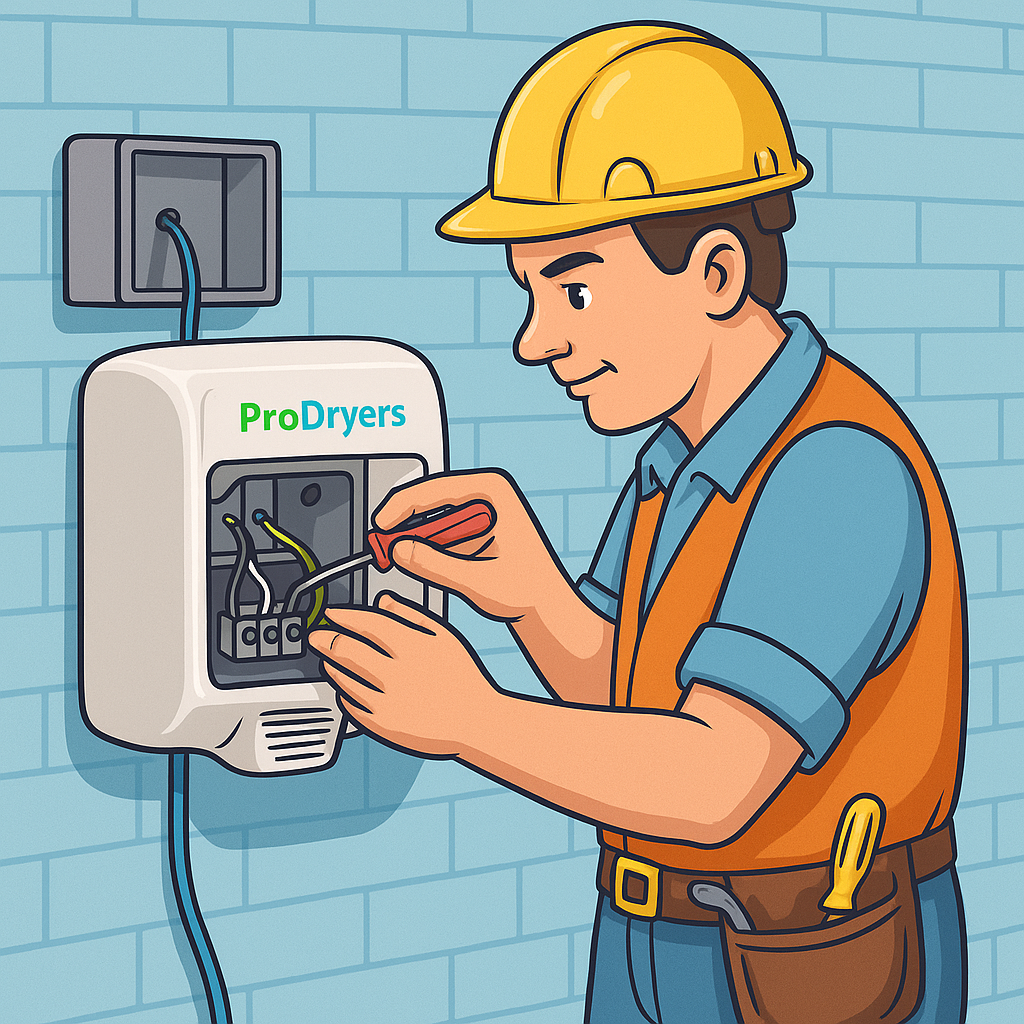
Step 6: Electrical Wiring
Inside the dryer, you’ll find a wiring block or terminal strip. Follow the wiring diagram supplied by the manufacturer. Typical connections are:
- Black (line/hot) → connect to hot supply wire.
- White (neutral) → connect to neutral supply wire.
- Green or bare (ground) → connect to supply ground wire and ground terminal.
Steps:
- Strip wire insulation back ~½ inch.
- Connect wires using approved wire nuts or terminal screws.
- Ensure connections are tight and secure.
- Tuck wires neatly into the junction box.
- Reattach the dryer cover with tamper-proof screws.
Step 7: Restore Power and Test
- Switch power back on at the breaker.
- Test the dryer by placing hands under the sensor (or pressing the button on manual models).
- Verify the unit starts/stops correctly and airflow is strong.
- Listen for unusual noises or vibration.
- Check the dryer shuts off automatically when hands are removed.
Step 8: Final Checks and Maintenance Setup
- Confirm dryer height and ADA compliance one final time.
- Make sure mounting hardware is tight.
- If multiple dryers are installed, test each one.
- Establish a maintenance schedule:
-
- Wipe exterior surfaces regularly.
- Inspect wiring and mounting screws periodically.
- Replace HEPA filters (if included) according to manufacturer guidelines.
Safety and Compliance Notes
- Always follow the manufacturer’s installation manual for your specific dryer.
- All wiring must comply with local electrical codes.
- ADA compliance is required for public restrooms in the U.S.
- Do not attempt installation if you are not trained in electrical work — always involve a licensed electrician.
Final Word
With the right tools, planning, and a qualified electrician for wiring, installing a hand dryer is a straightforward process. Careful attention to ADA placement, secure mounting, and proper electrical connection will ensure your unit operates safely and efficiently for years.
For expert advice and the best selection of hand dryers from top brands like Dyson, Excel Dryer, World Dryer, and Bobrick, shop at ProDryers.com.