
Restrooms of 2035: The Future of Hand Dryers, Touchless Tech, and Smart Hygiene
Posted by ProDryers on Apr 21st 2025
What Public Restrooms Could Be Like in the Year 2035
The year is 2035, and public restrooms are nothing like the ones we use today. Fueled by advances in AI, sensor technology, IoT (Internet of Things), and sustainable design, restrooms of the future are intelligent, hyper-efficient, and touch-free sanctuaries of hygiene. Businesses and facility managers no longer view restrooms as mere necessities—they're now brand-enhancing experiences.
Let’s take a walk into the future and imagine what commercial restrooms could become just a decade from now. From smart hand dryers to AI-powered cleaning systems, the future is closer than we think.
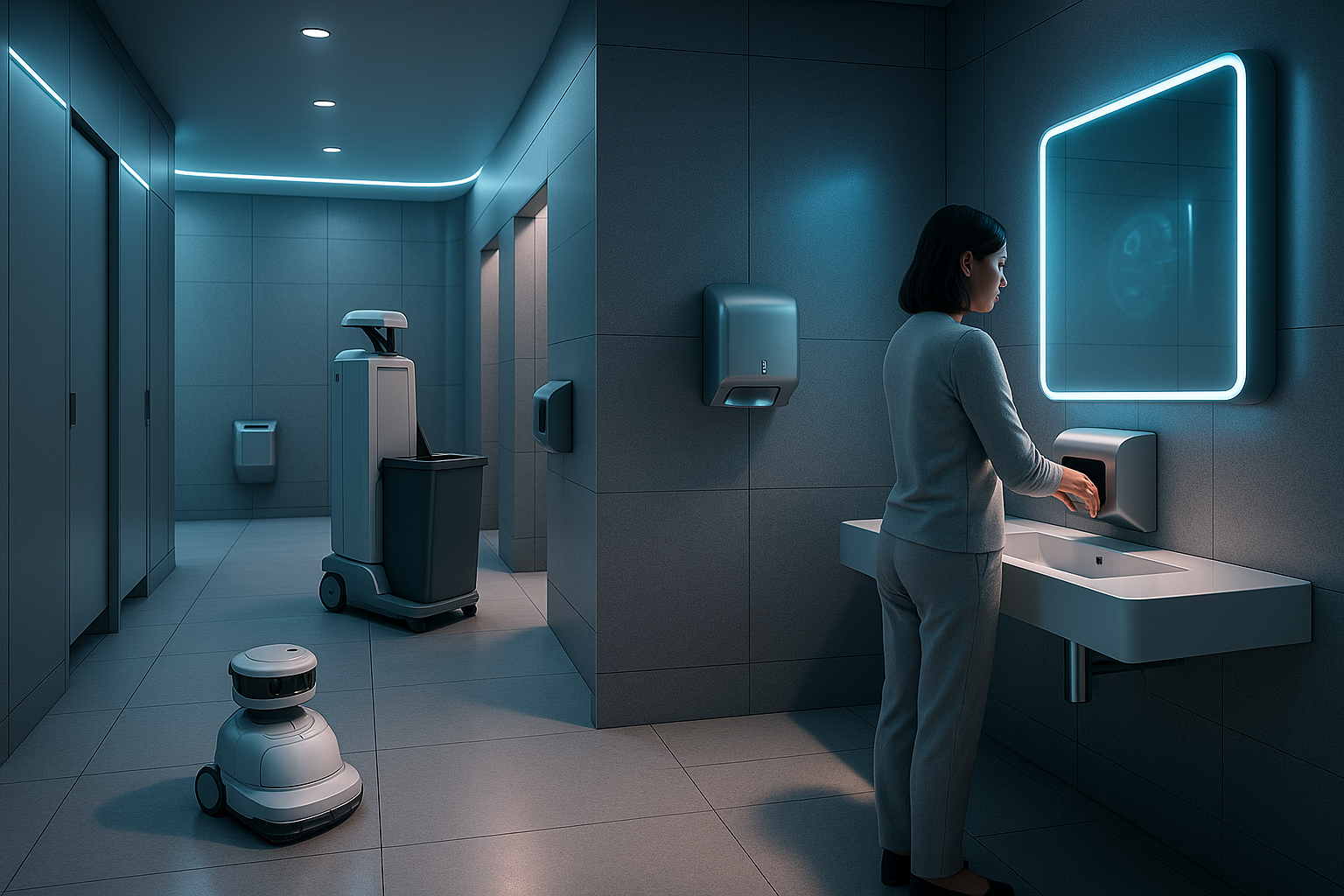
Touchless Everything: The Standard of Hygiene
By 2035, physical contact in restrooms is virtually nonexistent. Every fixture—from toilets and faucets to hand dryers and doors—is activated by advanced proximity sensors or voice commands. Upon entering the restroom, sensors detect your presence and activate soft, ambient lighting. A brief AI-generated greeting provides directions to available stalls, guiding you with floor-level LEDs.
Faucets dispense water automatically based on your temperature preference, which is stored securely in your digital restroom profile. Soap dispensers detect hand position and dispense the right amount based on time-of-day data and user history. When you’re done, a hand dryer begins automatically with air pressure and temperature customized to your profile. For first-time users, the system uses biometric readings to adjust settings in real-time.
Smart Hand Dryers With IoT Integration
In 2035, hand dryers have transformed from simple appliances into intelligent hygiene hubs. Units like the next-gen XLERATOR or VERDEdri 3.0 sync with facility-wide restroom networks. These dryers self-diagnose issues, request maintenance automatically, and log performance analytics accessible through a building’s centralized dashboard.
Hand dryers now analyze airflow, humidity levels, and drying effectiveness with microscopic precision. They use embedded HEPA and UV-C filtration systems to sanitize the air in real time. Some models even include built-in scent diffusers or sound design to enhance the drying experience.
Facility managers can also monitor usage trends and energy consumption via an app. Alerts are sent if filters need replacement or if there's a drop in performance, ensuring optimal functionality at all times.
AI-Driven Restroom Management
Restrooms in 2035 are maintained by AI systems that continuously monitor cleanliness, supply levels, and traffic flow. The system sends cleaning crews when needed—not on a fixed schedule, but in response to actual usage. Smart sensors detect spills, odors, or waste bin fill levels and notify janitorial staff in real-time.
AI also learns behavioral patterns of restroom use during different times of day or week. It predicts traffic spikes during lunch hours or events, prepping restrooms ahead of time. Lighting, temperature, and ventilation adjust automatically for user comfort, and the entire system is managed from a single touchscreen interface or smartphone.
Privacy Meets Personalization
In 2035, public restrooms offer a balance of privacy and personalization. Stalls are equipped with frosted smart glass that turns opaque when occupied. They also provide calming ambient noise to drown out sounds and enhance comfort.
Users with opt-in digital restroom profiles enjoy personalized settings. From stall lighting tone to water temperature and preferred drying style, the restroom adapts in seconds. These settings follow users between facilities thanks to cloud-based data synced via wearables or smartphones.
Sustainability at the Core
Restrooms are now models of eco-efficiency. Greywater systems recycle sink water for toilet flushing. Solar panels power restroom electronics. Energy-efficient hand dryers use less than 500 watts and operate with minimal noise.
Recycled and compostable materials are used for any dispensable products, though paper usage is minimal due to the overwhelming reliance on hand dryers. Even scent dispensers use biodegradable cartridges made from recycled ocean plastics.
Buildings now earn restroom-specific LEED certifications, and hygiene reports are displayed digitally at the restroom entrance to ensure public confidence.
Smart Restroom Fixtures Across the Board
Restrooms in 2035 are outfitted with products that communicate and coordinate. Sloan faucets and flushometers now come with real-time diagnostics and automatic self-cleaning. Soap dispensers and sinks monitor handwashing time and offer gentle reminders to improve hygiene.
Urinals automatically analyze urine for hydration and health markers—offering a subtle nudge if you're low on fluids. Mirrors feature touch-free displays for facility messages, ads, or news. AI-driven voice assistants provide directions, answer basic questions, and help people with disabilities navigate the space.
Enhanced Accessibility and Inclusivity
Accessibility goes far beyond ADA compliance. Restrooms now cater to individuals of all abilities, ages, and identities. Stalls are universally sized, with sliding doors and adjustable-height fixtures. Real-time language translation and visual assistance are available for non-English speakers and those with visual impairments.
Gender-neutral design is the default in most new facilities, offering complete privacy and safety for all users. Occupancy indicators and wayfinding help prevent confusion or awkward interactions.
Smart Baby Changing and Family Areas
Baby changing stations have evolved significantly. Brands like Foundations and ASI now offer temperature-regulated, self-sanitizing changing surfaces. Sensors detect usage and initiate a brief UV-C cleaning cycle between users.
Family rooms include soft lighting, sound-absorbing panels, and AI-powered child monitoring to alert parents if a toddler wanders. Nursing stations offer temperature control, voice-activated lighting, and entertainment options—all touch-free.
Branded, Artistic, and Custom Aesthetic Features
Design is no longer an afterthought. Businesses in 2035 use restroom design as an extension of their brand identity. Excel Dryer’s partnership with Artists for Humanity has grown into a global initiative. Custom hand dryer covers now showcase local artists, community causes, or seasonal graphics.
Restrooms in hotels, stadiums, and restaurants are Instagram-worthy spaces with custom LED lighting, designer fixtures, and harmonized color palettes. Even stalls and mirrors offer brand tie-ins through subtle logos or thematic design elements.
Restroom Analytics and Data Privacy
With the rise of intelligent restroom technology, data privacy becomes more important than ever. Restrooms equipped with IoT sensors collect vast amounts of data, including usage frequency, traffic flow, and hygiene compliance. While this data helps facilities operate more efficiently, there are safeguards in place to ensure user privacy.
All personal preferences stored in digital restroom profiles are encrypted. Users can opt in or out of data sharing and choose what is remembered by the system. The anonymized data is used to optimize supply chains, reduce waste, and improve the overall experience—without compromising user trust.
Emergency Response and Safety Features
Public safety is another critical advancement in future restrooms. Sensors monitor user activity patterns and can detect emergencies such as falls or unresponsiveness. In such situations, the system alerts building security or emergency personnel, and stalls unlock to allow access.
Security cameras equipped with AI can differentiate between routine activity and potential emergencies while maintaining privacy. This adds an extra layer of security, especially in high-traffic environments like airports or event venues.
Gamification and User Engagement
To make hygiene more engaging—especially for children—2035 restrooms introduce subtle gamification features. LED timers near sinks encourage users to wash their hands for a full 20 seconds. Hand dryers feature touchless interactive screens that offer fun graphics and sounds during the drying cycle.
In restaurants and retail spaces, users may even earn points or rewards for consistent handwashing tracked anonymously through digital restroom profiles. These incentives promote public health while reinforcing brand loyalty.
The Role of AI in Restroom Design
Artificial intelligence plays a major role in designing restrooms that work better for everyone. AI uses past data, simulations, and behavioral models to help architects and engineers optimize the layout of new restroom spaces.
This includes everything from traffic flow and wait times to ventilation and accessibility. AI can even recommend materials and fixtures that align with sustainability goals or regional climate conditions. This results in restrooms that are not only smarter but also more cost-effective and user-friendly.
Integration With Smart Building Systems
Restrooms in 2035 are fully integrated into broader smart building systems. They communicate with HVAC units to manage airflow, lighting systems to optimize energy use, and security systems to enforce occupancy limits or respond to emergencies.
All of this is coordinated through centralized dashboards that provide real-time data to facility managers. Reports include restroom performance, energy usage, user satisfaction, and even predictive maintenance alerts—streamlining operations across the board.
What’s Next? Predictive Hygiene and Fully Autonomous Systems
Looking ahead beyond 2035, restrooms may become fully autonomous. AI may predict when a user needs to go based on hydration levels or activity trackers and guide them to the nearest restroom. Voice-enabled AI may offer hygiene coaching based on biometric analysis.
We might see modular, self-cleaning restrooms that deploy temporarily at high-traffic locations or public events. These could be delivered by autonomous vehicles and assembled on demand.
The future could even include restroom experiences with mood-based lighting, aromatherapy, or AI music therapy, all curated based on a user’s current mood or stress level. Wellness and hygiene may merge into a holistic experience.
Final Thoughts: A Future That’s Closer Than You Think
The idea of restrooms being part of a building’s technological ecosystem isn’t far-fetched—it’s already beginning. As manufacturers embrace AI, IoT, and sustainability, we’re seeing products emerge that lay the groundwork for this future.
If you’re a facility manager, business owner, or architect, now is the time to start planning. Hand dryers and restroom fixtures are no longer commodities—they’re experiences, statements, and strategic investments.
At ProDryers, we’re proud to carry products that lead this transformation. From the cutting-edge XLERATOR and ThinAir models by Excel Dryer to Sloan’s advanced faucets and flushometers, we’re your partner in preparing for the restroom of tomorrow.
Explore the future—because it’s arriving faster than you think.